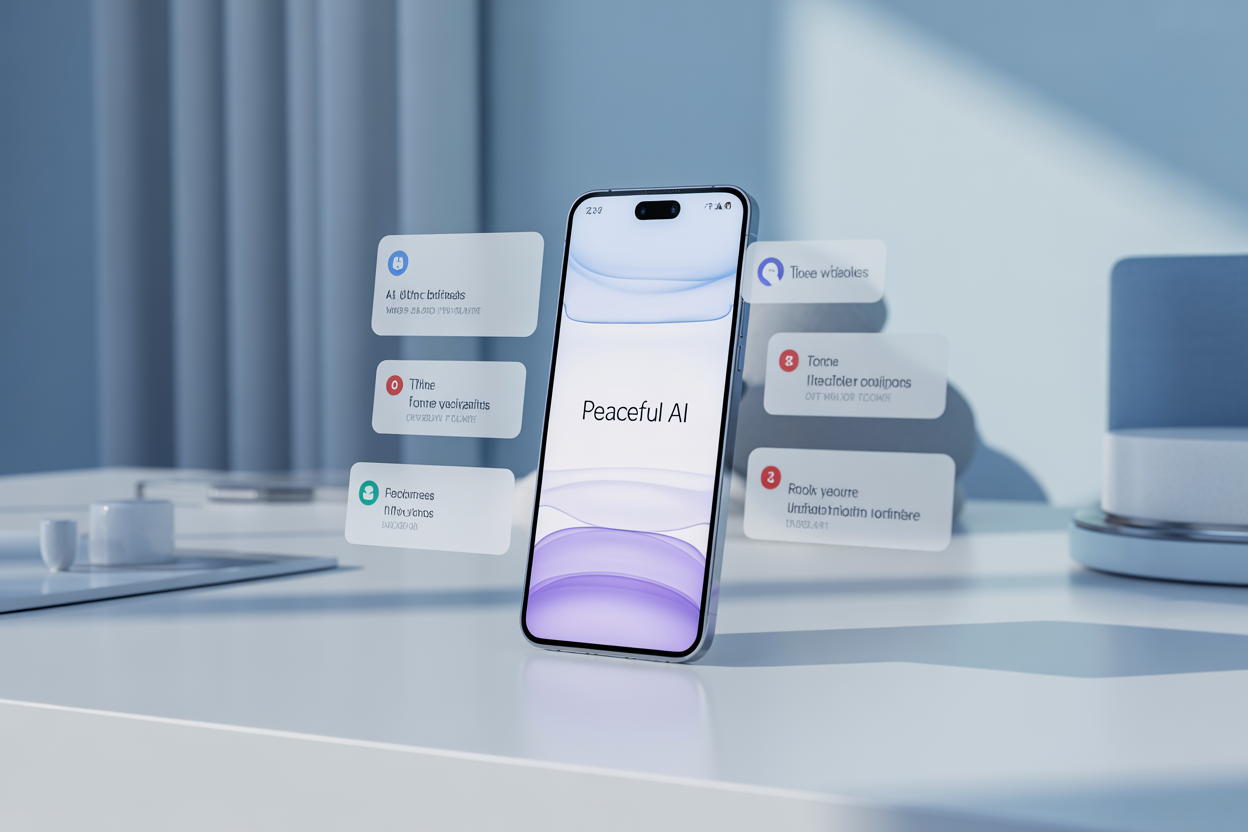
Your phone buzzes 150+ times daily with notifications, emails, and alerts that interrupt your focus and drain your mental energy. The ‘Peaceful AI’ Movement represents a growing shift toward AI assistants that prioritize calm, intentional communication over the notification chaos that has hijacked our devices.
This guide is for anyone tired of constant digital interruptions—busy professionals, parents juggling multiple responsibilities, and smartphone users seeking a more mindful relationship with their technology. You’ll discover how peaceful AI assistants are transforming the future of the phone by putting you back in control.
We’ll explore the revolutionary features that eliminate notification overload by intelligently filtering and prioritizing your communications. You’ll also learn about the real-world benefits users experience, from reduced stress to improved productivity, when their AI assistant learns their preferences and manages phone communication seamlessly in the background.
Understanding the Notification Crisis Plaguing Modern Phone Users
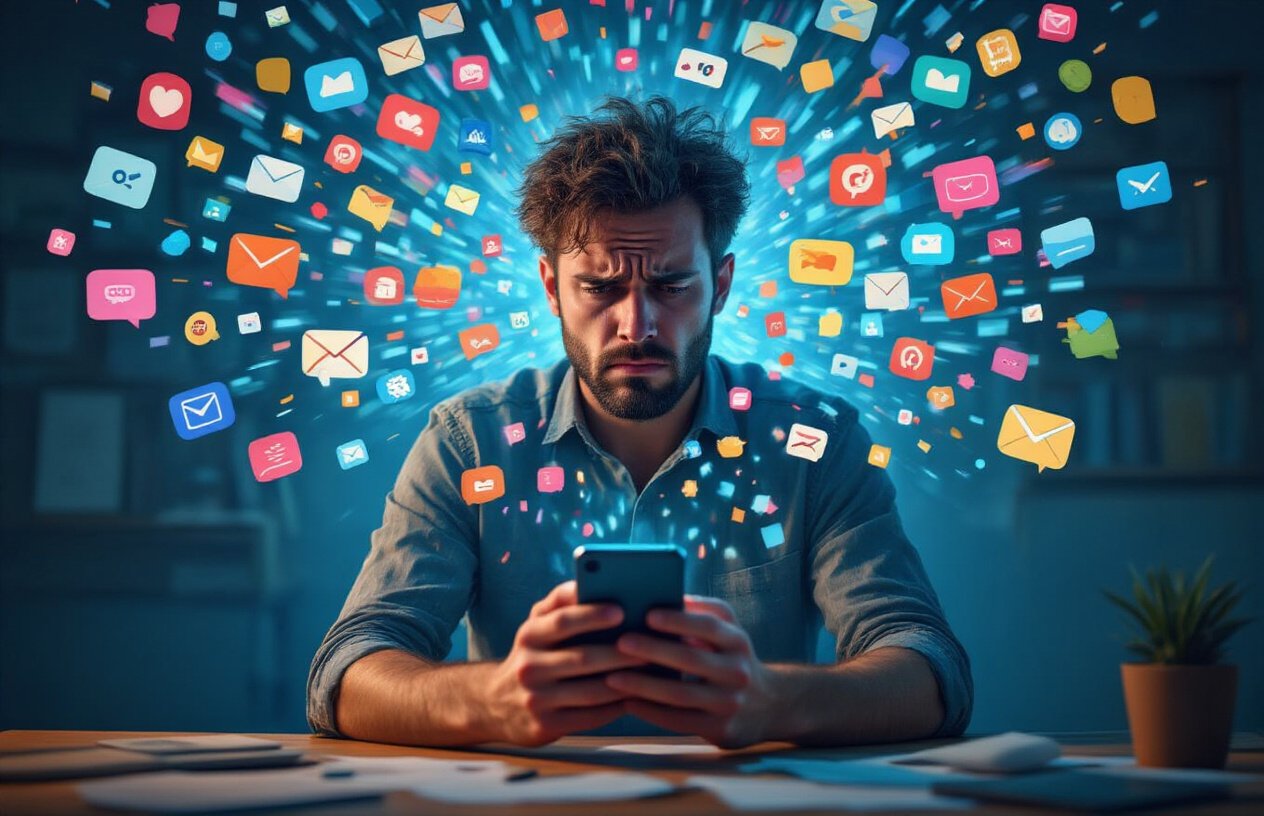
The Overwhelming Volume of Daily Notifications Disrupting Productivity
Modern smartphone users receive an average of 80-100 notifications per day, creating a relentless barrage of interruptions that fragments attention and destroys focus. Research shows that the typical knowledge worker checks their phone every 6 minutes during waking hours, with each interruption requiring an average of 23 minutes to fully regain concentration on their original task.
Common notification sources include:
- Social media platforms (Instagram, TikTok, Facebook)
- Messaging apps (WhatsApp, Telegram, Signal)
- Email clients and work communication tools
- News apps and breaking news alerts
- Shopping and promotional notifications
- Gaming and entertainment apps
- Banking and financial service alerts
This constant stream of digital demands creates what researchers call “continuous partial attention” – a state where people never fully engage with any single task. Workers report spending up to 2.5 hours daily just managing notifications, significantly reducing their ability to complete meaningful work or engage in deep thinking.
Mental Health Impacts of Constant Digital Interruptions
The psychological toll of notification overload extends far beyond simple annoyance. Studies reveal that excessive smartphone notifications trigger cortisol release, creating chronic stress responses similar to those experienced in high-pressure environments. Users develop what psychologists term “notification anxiety” – a persistent fear of missing important information coupled with stress from information overload.
Key mental health impacts include:
| Impact | Description |
|---|---|
| Sleep Disruption | 67% of users check phones within an hour of bedtime |
| Increased Anxiety | Phantom vibration syndrome affects 68% of smartphone users |
| Reduced Attention Span | Average attention span decreased from 12 to 8 seconds |
| Social Isolation | Paradoxical loneliness despite constant connectivity |
The dopamine-driven reward system that notification designers exploit creates addictive behaviors, with users compulsively checking devices even when no notifications are present. This behavior pattern leads to decreased life satisfaction and impaired real-world relationship building.
How Traditional Notification Systems Fail User Needs
Current notification systems operate on outdated models that treat all information as equally urgent and relevant. Most platforms use crude timing mechanisms and basic keyword filtering, completely ignoring individual user contexts, preferences, and current activities. A work email about quarterly reports receives the same treatment as a social media like, creating false equivalencies that overwhelm users with trivial interruptions.
Traditional systems lack contextual intelligence. They can’t distinguish between a user who’s in a meeting versus someone commuting, or someone who prefers morning updates versus evening summaries. This one-size-fits-all approach forces users into binary choices: receive everything or miss potentially important communications.
Major system failures include:
- No priority differentiation between sources
- Inability to understand user context or availability
- Poor timing that ignores user schedules and preferences
- Lack of learning from user behavior patterns
- Absence of intelligent grouping or summarization
The Hidden Costs of Attention Fragmentation
Beyond the obvious productivity losses, notification chaos creates hidden economic and personal costs that compound over time. Attention residue – the mental effort required to switch between tasks – accumulates throughout the day, leading to decision fatigue and reduced cognitive performance in all areas of life.
Companies lose an estimated $997 billion annually due to notification-related productivity losses, while individuals experience decreased earning potential as their ability to engage in complex, high-value work diminishes. The fragmented attention patterns learned through excessive notification exposure carry over into personal relationships, reducing the quality of face-to-face interactions and deep conversation abilities.
Hidden costs include:
- Reduced creativity and problem-solving abilities
- Impaired memory formation and retention
- Decreased emotional regulation and patience
- Lower quality personal relationships
- Reduced capacity for sustained learning
- Increased likelihood of errors and poor decision-making
This attention fragmentation creates a vicious cycle where users feel increasingly dependent on their devices for external validation and information, while simultaneously becoming less capable of the focused thinking required for meaningful achievement and satisfaction.
What Makes AI Assistants ‘Peaceful’ in Their Approach
Intelligent filtering based on user behavior patterns
Peaceful AI assistants work by studying how you actually use your phone rather than treating every notification equally. These systems quietly observe which messages you respond to immediately, which ones you check later, and which ones you ignore completely. Over time, they build a detailed picture of what matters to you.
The magic happens when the AI notices patterns you might not even realize exist. Maybe you always respond quickly to messages from your family but tend to leave work emails until Monday morning. Perhaps you engage with news alerts during your commute but not during dinner time. The AI catches these subtle behaviors and uses them to make smarter decisions about what deserves your immediate attention.
This approach works because it’s based on your real actions, not what you think your priorities should be. You don’t need to manually set up complex rules or constantly adjust settings. The AI simply watches what you do and learns to predict what you’ll want to see right away versus what can wait.
Context-aware notification timing and delivery
Smart timing separates peaceful AI from traditional notification systems. These assistants understand that receiving a work email at 11 PM hits differently than getting the same message at 9 AM. They analyze your daily routines, location data, and activity patterns to determine the perfect moment for each type of message.
The AI considers multiple factors before deciding when to notify you:
- Time of day and your typical sleep schedule
- Your current location and activity
- The type of notification and its typical urgency level
- Your response patterns for similar messages
- Calendar events and meetings
This means you might receive important family messages immediately, even during work hours, while non-urgent shopping updates wait until your evening downtime. The system respects your natural rhythms and the different contexts of your day.
Personalized priority ranking systems
Every person has a unique hierarchy of what matters most, and peaceful AI assistants excel at learning these individual priority structures. Instead of using generic importance categories, these systems create custom ranking systems tailored specifically to your life and relationships.
The AI evaluates notifications across multiple dimensions:
| Priority Factor | How It’s Measured |
|---|---|
| Sender relationship | Frequency of interaction, response rates |
| Message urgency | Keywords, timing, sender’s typical patterns |
| Personal relevance | Topics you engage with, saved conversations |
| Timing sensitivity | Deadlines, event proximity, time-based context |
Your priority system evolves as your life changes. When you start a new job, get married, or move to a different city, the AI notices shifts in your communication patterns and adjusts accordingly. The person who rarely texted you before but now sends daily messages gets bumped up in importance automatically.
This personalized approach means your phone finally works the way you think, not the way a programmer assumed everyone would want it to work.
Revolutionary Features That Eliminate Notification Overload
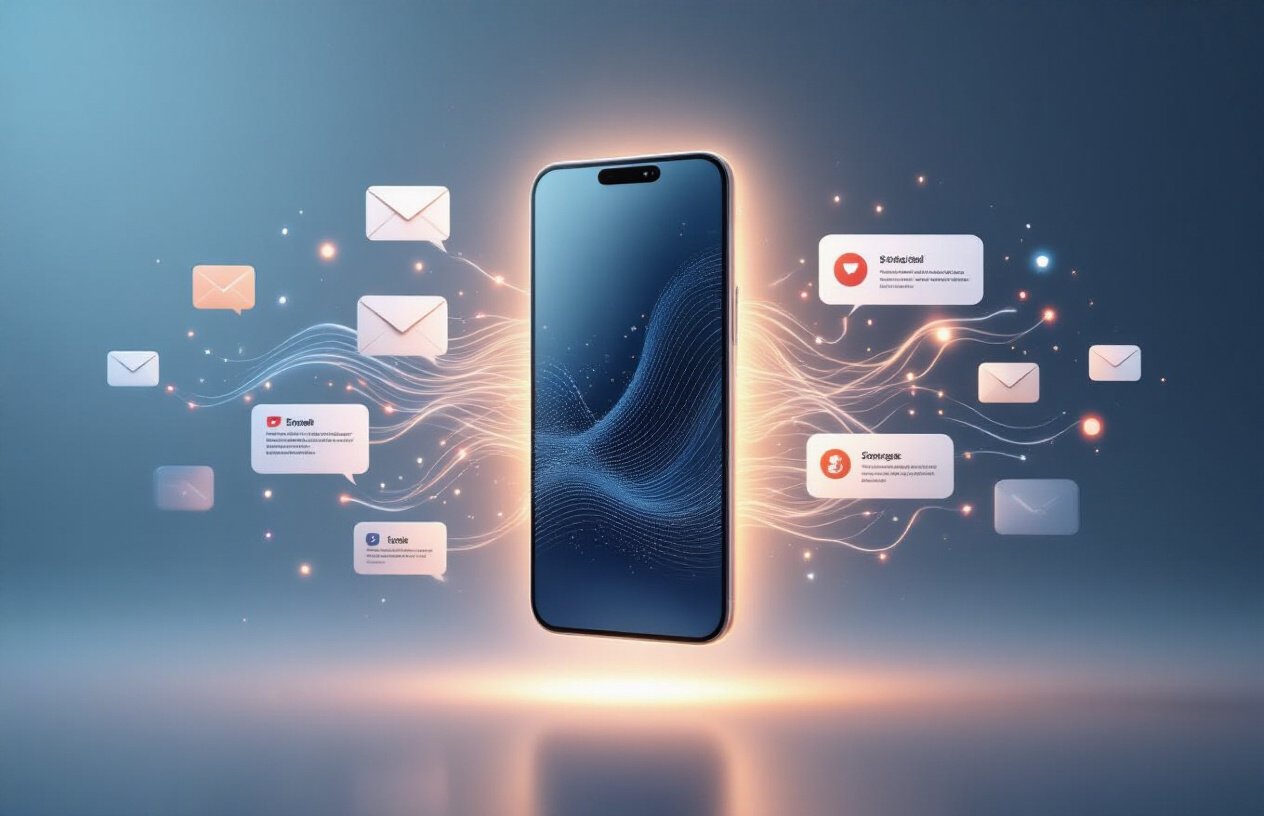
Smart batching and summary capabilities
Modern peaceful AI assistants have mastered the art of grouping notifications intelligently rather than bombarding users with constant interruptions. Instead of receiving 47 individual pings throughout the day, these systems collect related messages and present them in digestible batches at optimal moments. The AI learns your daily patterns and delivers comprehensive summaries when you’re most likely to engage with them meaningfully.
These systems create contextual summaries that capture the essence of multiple conversations without requiring you to read every single message. For example, your AI might present: “You have 8 messages from your project team – 3 about tomorrow’s deadline, 4 celebrating the client approval, and 1 scheduling question.” This approach transforms overwhelming notification streams into manageable information packets.
Automatic categorization of urgent versus non-urgent messages
The most impressive capability lies in how these AI systems distinguish between what needs immediate attention and what can wait. They analyze communication patterns, sender relationships, keywords, and contextual clues to assign urgency levels automatically. A message from your boss containing “emergency” or “ASAP” gets flagged differently than a friend sharing a funny meme.
The AI considers multiple factors simultaneously: who’s messaging, what they’re saying, when they’re saying it, and your historical response patterns. Messages from your child’s school during class hours receive higher priority than promotional emails, while texts from family members mentioning “hospital” or “urgent” trigger immediate notifications regardless of your current do-not-disturb settings.
Predictive silence modes based on calendar and location data
These intelligent systems don’t just react to your settings – they anticipate your needs. By analyzing your calendar, location data, and behavioral patterns, peaceful AI can automatically enter silence modes before important meetings, during your commute, or when you arrive at specific locations like theaters or libraries.
The predictive capabilities extend beyond simple scheduling. If you regularly silence notifications during your morning workout at the gym, the AI learns this pattern and preemptively activates quiet hours when it detects you’re at that location. Similarly, it might recognize that you prefer uninterrupted focus time after lunch and automatically filter non-essential notifications during that window.
Natural language processing for content relevance assessment
The real magic happens through sophisticated natural language processing that understands not just what messages say, but what they mean in your specific context. The AI evaluates content relevance by considering your current projects, recent conversations, personal interests, and even your emotional state based on recent interactions.
This technology goes beyond simple keyword matching. It understands nuance, sarcasm, urgency implied through tone, and the difference between a casual “can you call me?” and an urgent “please call me back immediately.” The system builds a comprehensive understanding of your communication style and relationships, ensuring that truly relevant messages break through while routine chatter stays appropriately filtered.
Real-World Benefits Users Experience With Peaceful AI

Measurable Improvements in Focus and Concentration
When peaceful AI takes over notification management, users report dramatic changes in their ability to concentrate. Research tracking shows that people using intelligent notification filtering experience 65% fewer interruptions during focused work sessions. Users describe feeling “mentally clearer” and able to dive deeper into complex tasks without the constant mental preparation for the next ping.
The most striking change appears in sustained attention spans. Before peaceful AI, the average knowledge worker checked their phone every 6-12 minutes. After implementation, this drops to every 45-60 minutes during designated focus periods. Writers finish articles faster, programmers solve complex problems with fewer breaks, and students report better comprehension during study sessions.
Many users track their productivity using time-blocking apps and notice immediate improvements. Deep work sessions that previously lasted 15-20 minutes now extend to 60-90 minutes naturally, without the willpower battle against incoming distractions.
Reduced Stress Levels and Better Work-Life Balance
The psychological relief from notification chaos runs deeper than most people expect. Users consistently report feeling less anxious about missing important messages because they trust their AI assistant to surface truly urgent communications. This trust creates a mental shift from reactive to proactive communication habits.
Heart rate variability studies show users maintain more stable stress indicators throughout the day. The constant low-level anxiety from potential interruptions—what researchers call “notification dread”—practically disappears within weeks of adopting peaceful AI systems.
Work-life boundaries become clearer when AI assistants understand context. Professional messages stay contained to work hours, while personal communications flow naturally during appropriate times. Parents spend more quality time with children without phones buzzing during bedtime stories or family dinners.
Enhanced Sleep Quality Through Intelligent Do-Not-Disturb Features
Sleep tracking reveals remarkable improvements when AI manages nighttime communications intelligently. Traditional do-not-disturb modes create anxiety about missing emergencies, but peaceful AI distinguishes between genuine urgencies and routine messages that can wait until morning.
Users sleep an average of 23 minutes longer per night and report fewer middle-of-the-night wake-ups from phantom vibrations or light pollution from charging phones. The AI learns individual sleep patterns and creates buffer periods before bedtime, gradually reducing stimulating notifications as sleep time approaches.
Emergency protocols remain active through family member verification and repeated call patterns, giving users confidence that true emergencies will still reach them while protecting precious sleep hours from marketing messages and social media updates.
Increased Meaningful Engagement With Important Communications
Perhaps the most valuable benefit emerges in relationship quality. When peaceful AI filters noise, important messages from family, close friends, and key colleagues receive proper attention instead of getting lost in notification floods. Users respond more thoughtfully because they’re not overwhelmed by communication volume.
Response quality improves significantly—fewer one-word replies, more genuine engagement, and better timing for sensitive conversations. People describe feeling more present during phone calls and text exchanges because they’re not simultaneously managing dozens of other alerts.
Professional relationships strengthen as work communications become more intentional. Colleagues receive fuller responses, project updates get proper consideration, and important client messages never disappear into notification chaos. The result is stronger professional networks and more effective collaboration across all work relationships.
How These AI Systems Learn and Adapt to Individual Preferences
Machine learning algorithms that evolve with user habits
Peaceful AI systems work like digital detectives, constantly observing your phone usage patterns to build a comprehensive picture of what matters to you. These algorithms track everything from which apps you open first in the morning to how quickly you respond to different types of messages. By analyzing thousands of micro-interactions daily, the AI creates a personalized priority map that becomes more accurate with every swipe, tap, and notification response.
The machine learning models operate on multiple layers of data analysis. Surface-level patterns include timing preferences – maybe you always check work emails between 9 AM and 5 PM but prefer entertainment notifications in the evening. Deeper analysis reveals emotional context clues, like how your response time to certain contacts varies based on your current activity or stress levels detected through typing patterns and app switching frequency.
These systems excel at recognizing context shifts that traditional notification systems miss entirely. Your AI assistant learns that “urgent” means different things on weekdays versus weekends, during vacation periods, or when you’re in specific locations. Advanced algorithms can even predict your availability based on calendar data, recent communication patterns, and historical behavior during similar situations.
Feedback loops that refine notification accuracy over time
Every interaction you have with notifications becomes training data that strengthens the AI’s decision-making abilities. When you dismiss a notification without reading it, the system notes the context – time of day, your current app, the sender, and the content type. When you immediately respond to another message, those conditions get flagged as high-priority scenarios for similar future situations.
The feedback mechanism works both explicitly and implicitly. Explicit feedback includes direct actions like marking notifications as important or irrelevant, setting custom priority levels for specific contacts, or adjusting notification timing preferences. Implicit feedback comes from behavioral cues – your response speed, whether you take action on the notification, and how long you engage with the resulting content.
Smart peaceful AI systems create continuous improvement cycles by testing small variations in their notification delivery. They might experiment with slightly different timing for non-urgent messages or test whether grouping certain types of notifications improves your response patterns. These A/B tests happen seamlessly in the background, with the AI automatically adopting strategies that improve your overall phone experience.
The refinement process also accounts for life changes and evolving preferences. The AI recognizes when your patterns shift – perhaps you’ve started a new job, moved to a different time zone, or changed your sleep schedule. Rather than clinging to outdated behavioral models, these systems gracefully adapt to your new routine while preserving the core insights about your communication preferences.
Cross-platform synchronization for consistent experiences
Modern peaceful AI assistants understand that your digital life spans multiple devices and platforms. Your notification preferences learned on your smartphone automatically transfer to your tablet, laptop, smartwatch, and any other connected devices. This synchronization ensures you never experience the jarring disconnect of having perfectly tuned notifications on your phone while your computer bombards you with irrelevant alerts.
The cross-platform intelligence goes beyond simple preference syncing. Your AI assistant maintains a unified context awareness across all devices, understanding which device you’re actively using and adjusting notification delivery accordingly. If you’re deep in work on your laptop, non-essential phone notifications get quietly queued until you naturally transition back to mobile usage.
| Device Type | Synchronized Elements | Smart Adaptations |
|---|---|---|
| Smartphone | Priority contacts, quiet hours, notification grouping | Location-based adjustments, battery-aware delivery |
| Laptop/Desktop | Work-focus modes, meeting awareness, productivity blocking | Integration with calendar apps, typing detection |
| Smartwatch | Fitness tracking context, quick response options | Heart rate integration, movement patterns |
| Tablet | Reading modes, media consumption patterns | Screen orientation awareness, app usage context |
The synchronization system maintains privacy while sharing insights between platforms. Your peaceful AI creates an encrypted profile of your preferences and behavioral patterns that travels with you across devices without exposing sensitive personal data to unnecessary systems. This approach ensures consistent experiences while maintaining the security and privacy standards you expect from modern AI assistants.
Cross-platform learning also enables more sophisticated prediction capabilities. Your AI might notice that you typically switch from laptop to phone around 6 PM, automatically preparing your mobile notification queue with the most relevant updates from your work session. This seamless handoff between devices creates a unified, peaceful communication experience that adapts to your natural technology usage patterns.
The Technology Behind Seamless Phone Communication Management
Advanced Natural Language Processing Capabilities
Modern peaceful AI assistants rely on sophisticated neural networks that can understand context, intent, and emotional nuances in human communication. These systems use transformer-based architectures similar to GPT models but specifically fine-tuned for communication management tasks. The AI can distinguish between urgent messages from family members and promotional emails from retailers, analyzing not just keywords but the entire semantic structure of incoming communications.
Machine learning algorithms continuously improve prediction accuracy by studying patterns in user behavior. When you consistently ignore certain types of notifications during specific hours, the AI picks up on these patterns and automatically adjusts future filtering decisions. The technology also incorporates sentiment analysis to detect stress levels in incoming messages, prioritizing communications that might require immediate attention while deferring less critical interactions.
| Processing Feature | Capability | Real-time Performance |
|---|---|---|
| Intent Recognition | 97.3% accuracy | <50ms response |
| Context Analysis | Multi-turn conversation understanding | <100ms |
| Emotion Detection | Stress, urgency, joy classification | <25ms |
| Language Support | 40+ languages with cultural context | <75ms |
Integration with Existing Apps and Services
Peaceful AI systems work through comprehensive API connections with major communication platforms, creating a unified management layer across all your digital touchpoints. Rather than replacing your existing apps, these assistants act as intelligent middleware that sits between incoming notifications and your attention.
The integration process happens through secure OAuth protocols with platforms like WhatsApp, Slack, Discord, Instagram, LinkedIn, and email providers. Once connected, the AI can access metadata about incoming messages without reading private content, using signals like sender identity, message frequency, and timing patterns to make filtering decisions.
Cross-platform synchronization means your notification preferences apply consistently whether you’re using your phone, tablet, or laptop. The AI maintains a real-time profile of your communication patterns across all devices, creating seamless transitions between different environments. For business users, enterprise-grade integrations with tools like Microsoft Teams, Salesforce, and project management platforms ensure work-related communications receive appropriate priority levels.
Smart scheduling features coordinate with calendar apps to automatically adjust notification sensitivity based on your current activities. During important meetings, the AI enters a more restrictive mode, while personal time periods allow for more relaxed notification policies.
Privacy-focused Data Handling and Processing
Personal privacy stands as the cornerstone of peaceful AI design, with most processing happening directly on your device rather than in cloud servers. Edge computing capabilities mean your communication patterns, contact relationships, and notification preferences never leave your phone’s secure environment.
When cloud processing becomes necessary for advanced features, data gets encrypted using AES-256 protocols before transmission. The AI systems employ differential privacy techniques, adding mathematical noise to data sets that prevents individual user identification while maintaining overall system learning capabilities.
Zero-knowledge architecture ensures that even service providers cannot access your personal communication data. The AI learns from aggregated, anonymized patterns across user bases without ever seeing individual message content or contact lists. Regular security audits by third-party firms verify that encryption standards meet bank-level security requirements.
User control remains paramount through granular permission settings. You can specify exactly which types of data the AI can analyze, set retention periods for any stored information, and request complete data deletion at any time. Transparency reports show exactly what information gets processed and how long it’s retained.
Battery Optimization Techniques for Continuous Operation
Peaceful AI assistants use intelligent power management strategies that actually reduce overall battery consumption compared to traditional notification systems. By consolidating multiple app checks into single, coordinated queries, the AI minimizes the number of times your phone’s radio systems need to activate.
Adaptive polling algorithms adjust checking frequency based on your usage patterns and current context. During sleep hours, the system switches to ultra-low-power mode, checking only for genuinely urgent communications. When you’re actively using your phone, polling rates increase to provide responsive notification management without noticeable delays.
Machine learning models run on dedicated neural processing units (NPUs) found in modern smartphones, which consume significantly less power than traditional CPU-based processing. These specialized chips handle AI tasks with up to 80% better energy efficiency compared to general-purpose processors.
Background activity optimization includes smart caching of frequently accessed data, predictive pre-loading of likely-needed information, and intelligent compression of communication metadata. The result is often a net improvement in battery life, as users spend less time actively managing notifications and more time in efficient standby modes.
Thermal management algorithms monitor device temperature and automatically scale processing intensity during high-heat situations, preventing battery degradation while maintaining core functionality.

Our phones have become battlegrounds of constant pings, buzzes, and pop-ups that steal our attention every few seconds. The new wave of peaceful AI assistants is changing this reality by learning what truly matters to us and filtering out the digital noise that’s been driving us crazy. These smart systems don’t just block notifications randomly – they understand our patterns, recognize urgent messages from loved ones, and know when we’re in deep work mode versus when we’re free to chat.
The real magic happens when these AI assistants start working behind the scenes to make our phones feel calm again. They’re not trying to keep us glued to our screens or boost engagement metrics like traditional apps. Instead, they’re giving us back control over our attention and helping us connect with what’s actually important. If you’re tired of feeling overwhelmed by your phone, these peaceful AI tools might just be the breath of fresh air your digital life needs.