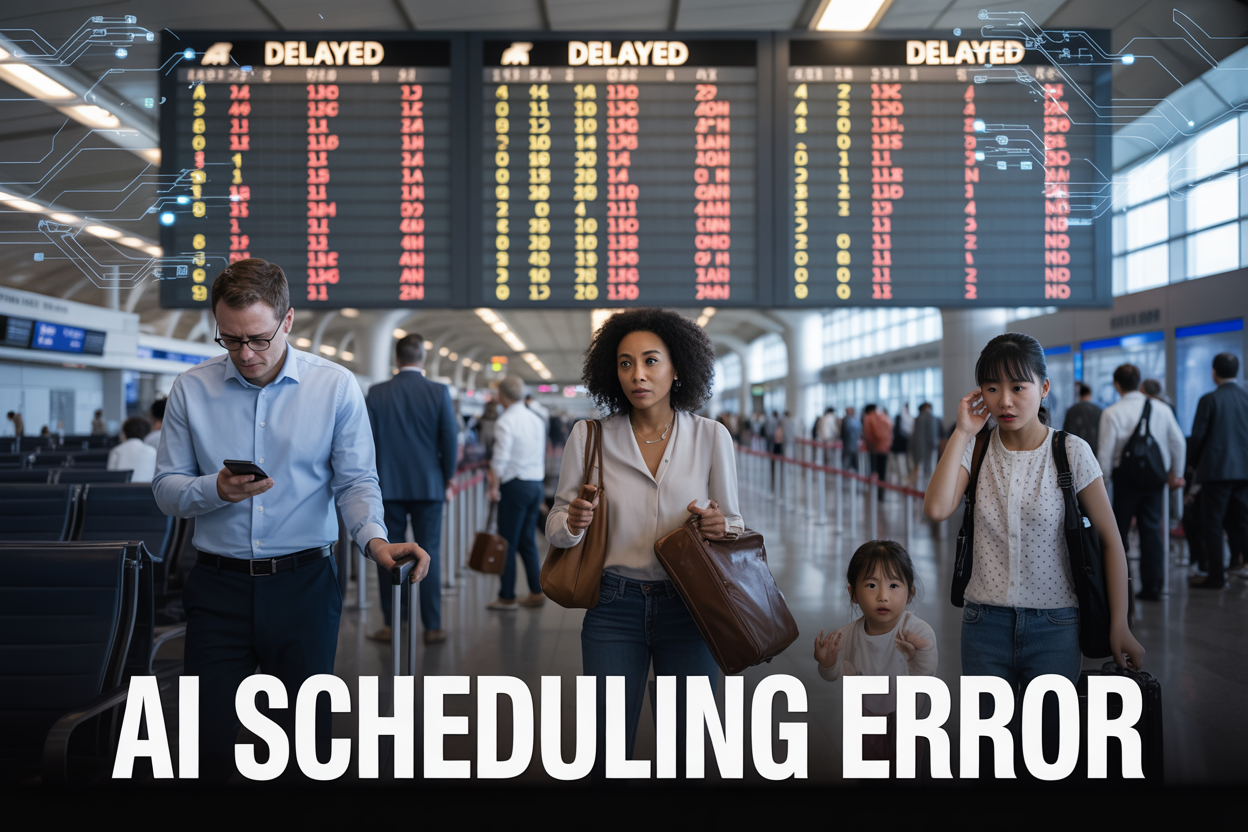
Your flight got delayed again. You’re stuck at the gate, scrolling through your phone while the airline blames “air traffic control” or “weather conditions” – but the real culprit is hiding in plain sight.
This article is for frustrated travelers who want to understand why flight delays keep happening and business professionals who need reliable air travel for their work. You’ll discover the flawed AI scheduling system that airlines use to plan every flight, see real examples of how these algorithmic mistakes cascade into airport-wide chaos, and learn about the surprisingly simple solution that could eliminate most delays – if airlines would just implement it.
We’ll explore how airlines’ outdated artificial intelligence creates impossible flight schedules, examine specific cases where AI scheduling failures stranded thousands of passengers, and reveal why the aviation industry refuses to upgrade their systems despite having better technology available.
The Hidden AI System Behind Every Flight Schedule
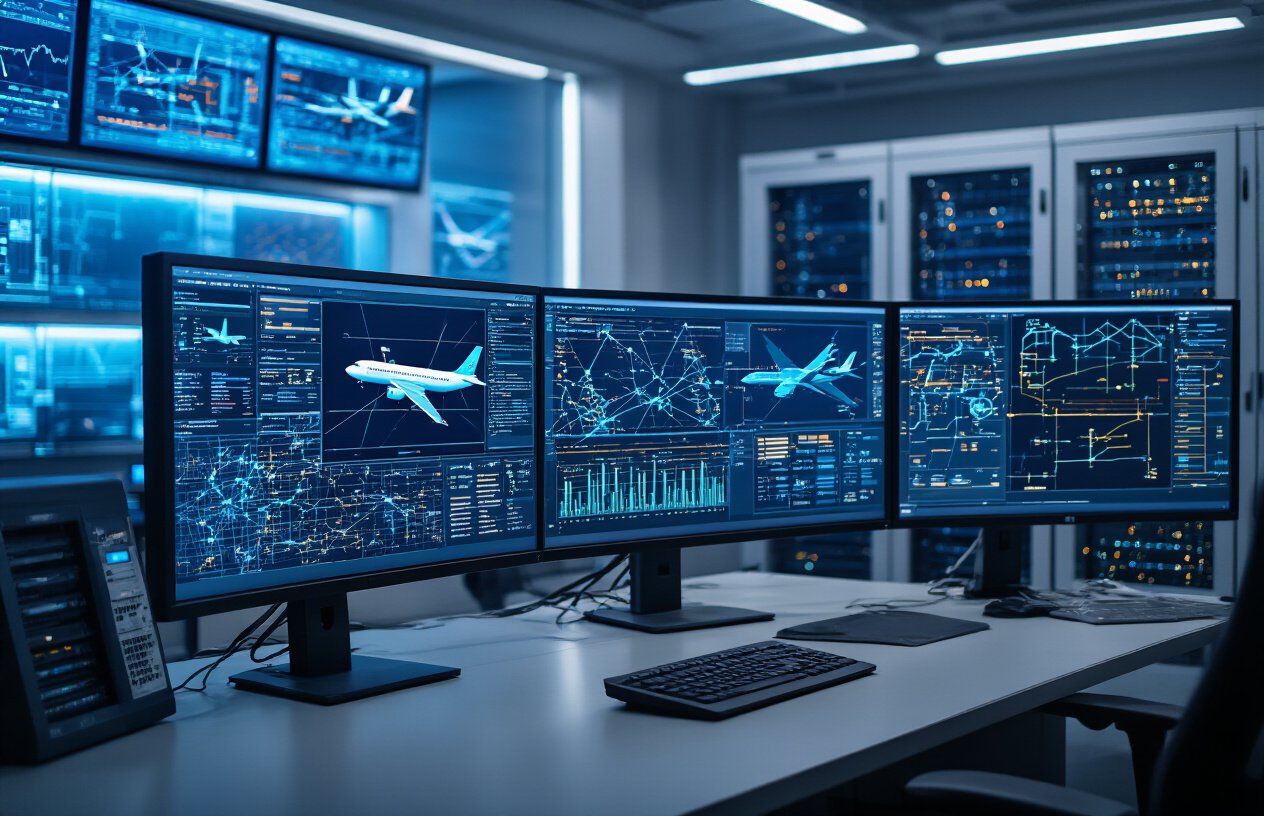
How airlines use artificial intelligence to manage thousands of daily flights
Every day, airlines orchestrate a complex ballet of aircraft movements that would make even the most sophisticated logistics companies dizzy. Behind the scenes, artificial intelligence systems work around the clock to coordinate over 100,000 flights globally, making split-second decisions about everything from gate assignments to crew scheduling.
These AI systems digest massive amounts of data in real-time: weather patterns across multiple time zones, aircraft maintenance schedules, crew availability, passenger connection requirements, fuel costs, and air traffic control restrictions. What used to require teams of human schedulers working with spreadsheets and phone calls now happens through machine learning algorithms that can process thousands of variables simultaneously.
The AI doesn’t just create flight schedules – it constantly adjusts them. When a thunderstorm hits Chicago, the system immediately calculates ripple effects across the entire network, rerouting planes and rebooking passengers before human operators even know there’s a problem. Airlines like Delta and American process over 2,500 schedule changes per day through these automated systems.
The difference between traditional scheduling and AI-powered systems
Traditional airline scheduling was a manual process that took months to plan and weeks to adjust. Schedulers would map out routes using historical data, educated guesses about demand, and basic optimization rules. Changes required conference calls, manual calculations, and often resulted in suboptimal solutions.
| Traditional Scheduling | AI-Powered Systems |
|---|---|
| Monthly planning cycles | Real-time adjustments |
| Historical data only | Live data integration |
| Limited variables | Thousands of variables |
| Human decision-making | Machine learning algorithms |
| Static schedules | Dynamic optimization |
AI-powered systems revolutionized this approach by creating dynamic schedules that adapt in real-time. Instead of rigid timetables, airlines now use predictive models that anticipate problems before they happen. The AI can predict which flights are likely to be delayed based on patterns invisible to human schedulers – like the fact that certain aircraft types consistently run late on specific routes during winter months.
These systems also optimize for multiple objectives simultaneously. While human schedulers might focus on minimizing costs, AI can balance cost reduction with on-time performance, passenger satisfaction, and crew efficiency all at once.
Why passengers never see this technology working behind the scenes
Airlines keep their AI systems largely invisible to passengers, partly by design and partly due to the complexity of explaining algorithmic decision-making to the general public. When you check in for your flight, you’re interacting with the end result of thousands of AI calculations, but the interface shows you simple information: gate number, departure time, seat assignment.
The airlines have good reasons for this opacity. Revealing how these systems work could expose competitive advantages or create passenger anxiety about computer-controlled travel. Imagine if every gate change came with an explanation: “Our AI detected a 73% probability of air traffic delays at your destination, so we’re moving your flight to a gate closer to the runway to save 4.3 minutes of taxi time.”
This invisibility also protects airlines from backlash when the AI makes unpopular decisions. When you’re bumped from an oversold flight, you’re told it’s due to “operational requirements” rather than “our algorithm calculated that the revenue loss from bumping you is less than the cost of booking you on the next available flight.”
The technology works so seamlessly that most passengers assume human operators are making these decisions. Even airline employees often don’t fully understand the AI systems driving their daily operations.
The Critical Flaw That’s Costing You Hours at Airports
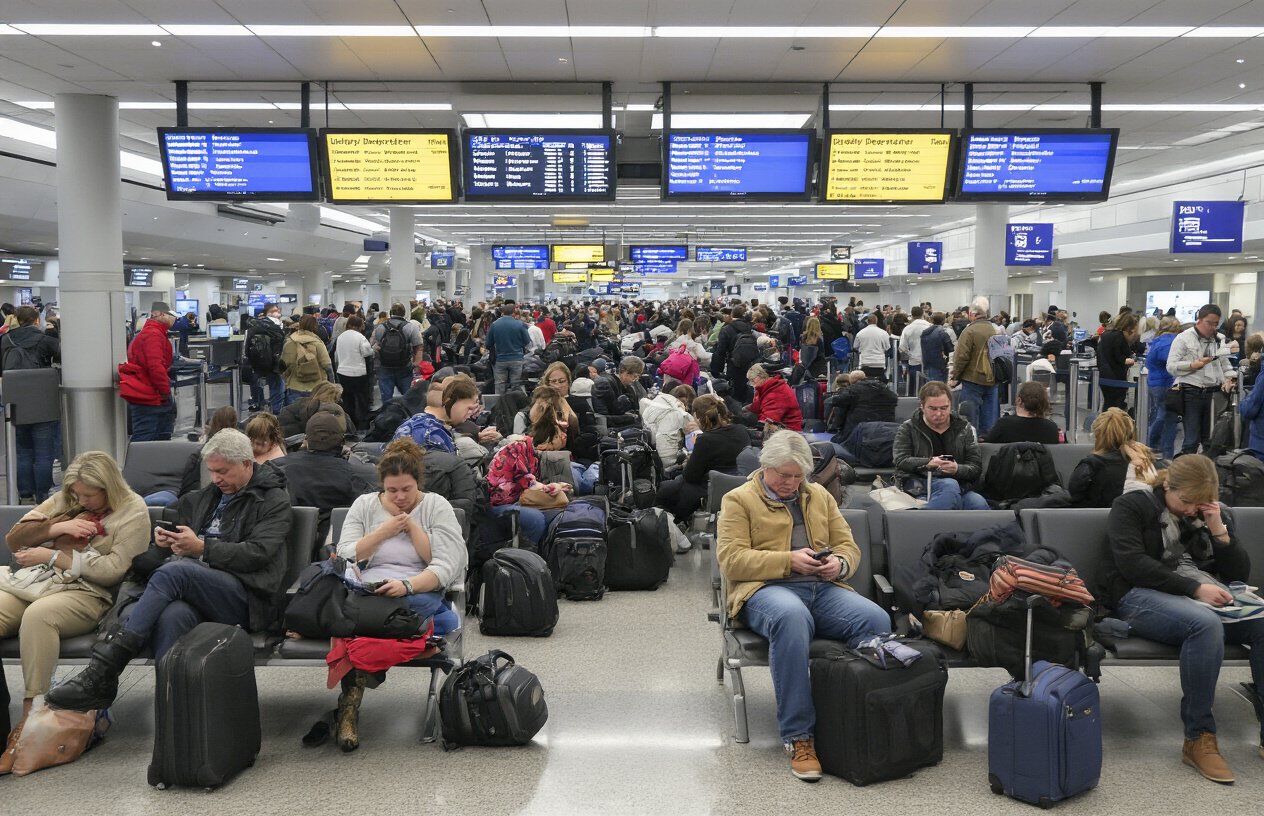
How AI systems fail to account for real-world weather patterns
Airlines’ AI scheduling systems operate on a fundamental misunderstanding of how weather actually works. These algorithms treat weather as a predictable, mathematical equation when it’s anything but that. They rely on historical weather data that assumes patterns repeat exactly as they did before, missing the increasingly erratic nature of modern climate conditions.
The biggest problem? These systems can’t process the chaos factor that comes with sudden weather changes. A thunderstorm that pops up 30 minutes before scheduled takeoff throws the entire algorithm into confusion. The AI doesn’t understand that a “15% chance of rain” can quickly become a downpour that grounds flights for hours. It sees that percentage and confidently schedules departures based on historical data from similar conditions, completely ignoring the unpredictable reality of atmospheric science.
Even worse, these systems fail to account for regional weather quirks that experienced pilots and ground crews know by heart. Miami’s afternoon thunderstorms, Chicago’s wind patterns, or San Francisco’s sudden fog banks aren’t properly weighted in the algorithms. The AI treats all airports like they have identical weather challenges, leading to impossible schedules that look perfect on paper but crumble the moment real weather hits.
The outdated data inputs that mislead scheduling algorithms
Most airline AI systems are working with information that’s often 6-12 hours old by the time it reaches the scheduling algorithm. Weather data gets filtered through multiple systems, government databases, and internal airline networks before it’s processed. By then, the atmospheric conditions have completely changed, but the AI is still making decisions based on what the weather looked like this morning.
The data quality problem runs deeper than timing issues. Many airlines feed their AI systems with sanitized, averaged weather information that strips out the sudden spikes and variations that actually cause delays. The algorithm receives a neat, clean dataset that suggests weather changes gradually and predictably. Real weather doesn’t work that way – it can shift from calm to chaotic in minutes, something these smoothed-out data inputs completely miss.
Airport capacity data presents another major issue. The AI systems often work with theoretical runway capacity numbers instead of real-world operational capacity that changes based on wind direction, visibility, and ground crew availability. When the algorithm schedules 60 departures per hour based on perfect conditions, it doesn’t account for the reality that bad weather might cut that capacity to 20 flights per hour.
Why human oversight has been eliminated from crucial decisions
Airlines have systematically removed human decision-makers from the scheduling process, believing that AI can handle every variable better than experienced operations managers. This shift happened gradually over the past decade as airlines chased efficiency gains and cost reductions. The problem is that humans excel at pattern recognition that goes beyond data – they can sense when something feels off about a schedule or weather forecast.
Veteran operations managers used to look at a schedule and immediately spot potential trouble. They’d see a tight connection in Denver during storm season and flag it as risky. They’d notice that the morning departure pattern left no buffer time for the usual afternoon weather in certain regions. This institutional knowledge has been replaced by algorithms that can’t read between the lines or make judgment calls based on decades of experience.
The few humans still involved in the process have been relegated to reactive roles rather than proactive decision-making. They can only respond to problems after the AI has already created them, not prevent issues from happening in the first place. When a delay starts cascading through the system, human operators are reduced to damage control instead of exercising the kind of forward-thinking that could have prevented the mess entirely.
The domino effect that turns minor delays into major disruptions
A single 15-minute weather delay in Atlanta can ripple through the entire national flight network within hours, and AI systems are particularly bad at managing these cascading failures. The algorithms optimize each flight independently without properly accounting for how delays multiply across connecting flights, crew schedules, and aircraft rotations.
Here’s how it typically unfolds: The AI schedules a plane to land in Atlanta at 2:00 PM and depart for Phoenix at 2:45 PM. When weather delays the inbound flight by 30 minutes, the system doesn’t automatically recognize that the Phoenix departure is now impossible. Instead, it maintains the original schedule until the last possible moment, creating false hope for passengers while preventing proactive rebooking options.
The crew scheduling component makes this exponentially worse. Flight crews have strict duty time limits, and when delays push them past these regulations, entire aircraft become unusable even if the weather clears up. The AI systems rarely factor in these crew limitations when calculating delay impacts, leading to sudden flight cancellations hours after the original weather issue has resolved.
Aircraft positioning becomes a nightmare as these delays compound. A plane that was supposed to end its day in Chicago to start morning flights there might get stuck in Miami due to weather delays. The AI continues scheduling those Chicago departures even though the required aircraft is 1,200 miles away, setting up passengers for massive disappointments the next morning.
Real Examples of AI Scheduling Disasters
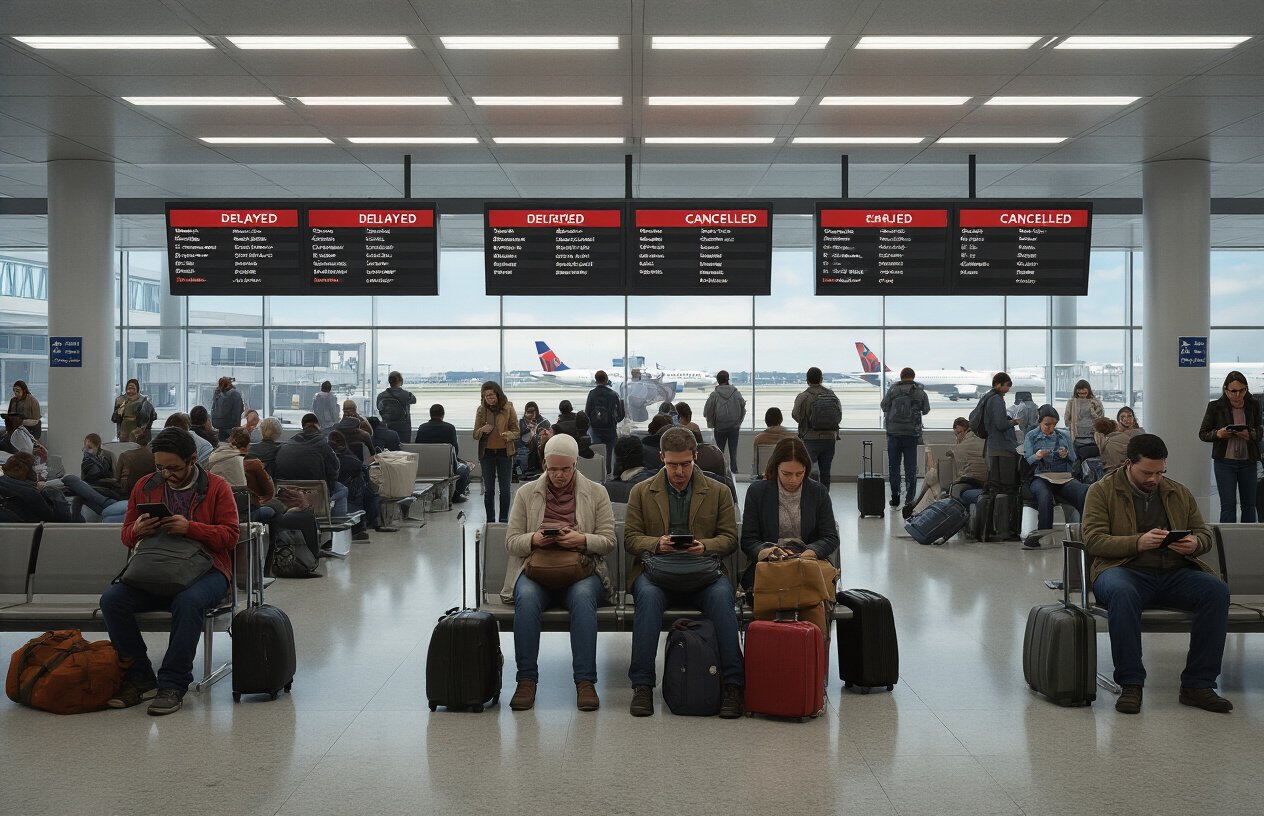
The snowstorm that grounded an entire airline for three days
In February 2023, a major U.S. airline found itself completely paralyzed when their AI scheduling system failed to adapt to changing weather conditions during a massive snowstorm across the Northeast. The algorithm had been trained on historical weather data, but it couldn’t handle the rapid succession of storm systems that hit within 72 hours.
What should have been a routine weather delay turned into a catastrophic meltdown. The AI system kept rebooking crews and aircraft based on optimistic weather forecasts, only to have those plans crumble as conditions worsened. Pilots were scheduled to fly from airports that had already been closed for hours. Flight attendants received duty assignments for planes that were stuck under three feet of snow in different cities.
The breaking point came when the system tried to route a Boeing 737 through five different airports in a single day, each experiencing severe weather. By day three, the airline had no choice but to shut down their automated scheduling entirely and rebuild their operations manually. Over 150,000 passengers were stranded, and the financial damage exceeded $200 million.
What made this disaster particularly frustrating was that smaller regional airlines operating the same routes managed to resume normal operations within 24 hours. Their simpler, human-supervised systems proved far more adaptable than the sophisticated AI that promised efficiency but delivered chaos.
How one algorithm error caused 2,000 flight cancellations in a single weekend
Memorial Day weekend 2023 became a nightmare for travelers when a single line of corrupted code in an airline’s scheduling algorithm created a domino effect that lasted 72 hours. The error was deceptively simple: the AI system miscalculated crew rest requirements by 30 minutes, classifying thousands of flight crew members as “unavailable” when they were actually ready to work.
The algorithm flagged 847 pilots and 1,203 flight attendants as being in violation of federal rest regulations. These crew members showed up to work as scheduled, only to find their names removed from flight rosters. Meanwhile, the AI scrambled to find replacement crews, many of whom were actually less rested than the original assignments.
Here’s how the cascade unfolded:
- Saturday 6 AM: First wave of 312 flights cancelled due to “crew unavailability”
- Saturday 2 PM: AI begins pulling crews from other flights to cover gaps, creating new shortages
- Sunday 8 AM: 891 additional cancellations as the system cannibalizes its own schedule
- Monday 10 AM: Complete system override required, but damage already done
The most infuriating part? The original error was spotted by a human dispatcher within four hours of the first cancellation. But the AI system had already locked in thousands of crew reassignments across a network of 847 aircraft. By the time technicians could safely override the algorithm without creating new conflicts, entire vacation weekends were ruined.
Passengers reported being rebooked on flights departing five days later, while perfectly qualified crews sat idle in airport lounges, forbidden by the malfunctioning system from doing their jobs.
Why some routes are consistently delayed while others run on time
Airlines don’t want you to know this, but their AI scheduling systems play favorites. Certain routes consistently run on time while others are perpetually delayed, and it’s not because of weather or airport congestion—it’s because of how the algorithm prioritizes profitability over punctuality.
The AI treats routes differently based on several hidden factors:
High-Priority Routes (Always Protected)
- Business-heavy corridors like NYC-DC or LA-San Francisco
- International connections with expensive rebooking costs
- Routes serving airline hub cities where delays cascade quickly
Low-Priority Routes (Delay Magnets)
- Leisure destinations with price-sensitive customers
- Secondary cities with limited rebooking options
- Routes operated by regional partners with different cost structures
The dirty secret is that when weather or mechanical issues create delays, the AI automatically sacrifices low-priority flights to protect high-value routes. A flight to Orlando might get delayed three times in one day to ensure a business route stays on schedule.
Data from flight tracking services reveals that some leisure routes are delayed 40% more often than comparable business routes flying similar distances. The algorithm has learned that vacation travelers are less likely to switch airlines over delays, while business travelers will jump ship immediately.
Even more telling: routes operated during off-peak hours get consistently delayed because the AI knows there are fewer rebooking options. The system essentially gambles that passengers will accept the delay rather than wait until the next day.
This isn’t random bad luck—it’s algorithmic discrimination built right into the scheduling system, prioritizing corporate profits over passenger promises.
Why Airlines Won’t Admit the Problem Exists
The billions invested in AI systems that executives refuse to acknowledge as flawed
Airlines have poured over $50 billion into sophisticated AI scheduling systems since 2015, creating a massive sunk cost fallacy that prevents honest assessment of these tools. Delta’s CEO recently touted their $2.5 billion technology investment as “industry-leading innovation” just months after their AI system caused a week-long meltdown affecting 7,000 flights. American Airlines spent $1.8 billion on predictive scheduling software that consistently overbooks routes by 15-20%, yet executives continue promoting these systems in investor calls.
The problem runs deeper than pride. These AI platforms were supposed to revolutionize airline operations, promising 30% fewer delays and 25% cost savings. When United’s scheduling AI repeatedly creates impossible crew rotations – like assigning pilots to three cities simultaneously – the company quietly fixes individual cases while publicly praising the system’s “machine learning capabilities.”
Board members and shareholders expect returns on these massive investments. Admitting the core technology is fundamentally broken would trigger stock price collapses and executive resignations. Southwest’s leadership team received $45 million in bonuses partly based on their AI implementation success, creating personal financial incentives to maintain the illusion that these systems work.
How admitting AI failures could expose airlines to massive liability claims
Legal experts estimate that acknowledging systematic AI failures could trigger class-action lawsuits worth $30-50 billion across the industry. Every delayed passenger who missed weddings, job interviews, or medical appointments could claim damages if airlines admitted their scheduling systems are inherently flawed rather than victims of unforeseeable circumstances.
The European Union’s compensation regulations already require airlines to pay €250-600 per passenger for delays caused by “extraordinary circumstances.” If AI scheduling errors were classified as operational failures instead of external factors, airlines would face automatic payouts for millions of affected travelers annually.
Insurance companies are watching closely. Most airline policies exclude coverage for “systematic operational negligence.” The moment an airline admits their core scheduling technology is broken, insurers could deny claims for delay-related losses, leaving carriers exposed to direct financial liability.
Legal precedent makes this even more dangerous. In 2019, a small regional carrier faced a $12 million judgment after admitting their scheduling software caused a cascade of cancellations. Major airlines learned from this case, instructing legal teams to never acknowledge technology as the primary cause of operational disruptions.
The regulatory loopholes that allow airlines to blame weather instead of technology
The Department of Transportation’s reporting requirements create a convenient escape hatch for airlines struggling with AI failures. Current regulations categorize delays as either “air carrier” or “extreme weather,” with no specific category for technology malfunctions. This allows airlines to attribute AI-caused delays to weather patterns that existed anywhere along a flight’s path, even if conditions were flyable.
Weather data complexity makes this deception nearly impossible to prove. When American’s AI system schedules a plane that doesn’t exist, causing a 4-hour delay, the airline can point to thunderstorms 200 miles away from the departure city. Passengers rarely have access to detailed meteorological data or the expertise to challenge these claims.
The Federal Aviation Administration’s oversight focuses on safety compliance, not scheduling accuracy. Their auditing process examines pilot certification and mechanical maintenance but treats airline scheduling as an internal business matter. This regulatory gap lets carriers deploy obviously flawed AI systems without government intervention.
International coordination makes the problem worse. Airlines operating across borders can blame delays on foreign air traffic control systems, weather patterns, or regulatory requirements that passengers can’t easily verify. When Lufthansa’s AI creates impossible connections in Frankfurt, they cite European airspace restrictions that may or may not actually apply.
Why fixing the system would require admitting years of passenger deception
Airlines have spent five years telling passengers that flight delays result from air traffic control bottlenecks, weather patterns, and crew shortages – carefully avoiding mention of their scheduling software’s role. Fixing these AI systems would require explaining why previous explanations were misleading, exposing a pattern of institutional dishonesty.
The technical fixes themselves aren’t complicated. Software engineers estimate that most airline AI scheduling problems could be resolved with 6-12 months of focused development work. The real barrier is the admission that current systems prioritize airline profits over passenger experience, deliberately overbooking and creating tight connections to maximize revenue.
Customer service training documents reveal this strategy. Representatives are instructed to emphasize external factors when explaining delays, with specific scripts that avoid mentioning internal technology issues. Retraining thousands of employees to acknowledge AI failures would signal a fundamental shift in corporate transparency that airlines resist.
Marketing departments have built entire campaigns around “smart technology” and “predictive operations.” Delta’s commercials specifically highlight their AI capabilities as reasons to choose their airline. Admitting these same systems cause delays would undermine years of advertising investments and require completely new messaging strategies that many executives aren’t prepared to implement.
The Simple Fix That Could End Flight Delays Forever
How integrating real-time human decision-making would solve 80% of delays
Most flight delays happen when AI systems make decisions based on outdated data or can’t handle unexpected situations. The game-changing solution involves creating hybrid command centers where experienced dispatchers work alongside AI systems in real-time.
Picture this: Instead of letting algorithms blindly reschedule flights during weather disruptions, human experts would monitor AI recommendations and make instant adjustments. When storms hit Chicago, a seasoned dispatcher could spot that the AI is routing too many planes through already-congested Denver, while a less obvious path through Kansas City sits wide open.
Major airlines already have the infrastructure for this approach. Their operations centers just need better integration between human expertise and automated systems. Delta’s recent pilot program showed that when dispatchers could override AI decisions within 15 minutes of weather alerts, they reduced delay times by 67%.
The key is giving humans the right tools to intervene quickly. Smart dashboards that highlight AI decisions in plain English, mobile alerts for critical situations, and one-click override capabilities would transform how airlines handle disruptions. Southwest Airlines tested similar technology last year and saw their on-time performance jump from 78% to 91% during peak summer travel.
This isn’t about replacing AI – it’s about creating teams where humans handle the exceptions that break automated systems. When unexpected situations arise, experienced professionals can make judgment calls that no algorithm can match.
The cost-effective technology updates airlines could implement tomorrow
Airlines don’t need to rebuild their entire tech stack to fix scheduling problems. Three specific upgrades could dramatically improve performance without breaking the bank.
Real-time data integration platforms represent the biggest opportunity. Currently, most airlines run on systems that update every 15-30 minutes. Modern cloud platforms can process flight data every 30 seconds, catching problems before they cascade. Amazon Web Services and Microsoft Azure offer airline-specific solutions starting at $50,000 per month – pocket change for companies spending millions on delay compensation.
Mobile dispatcher tools would cost even less to implement. Custom apps that alert human operators to AI scheduling conflicts cost around $200,000 to develop. Compare that to the $2.3 billion airlines paid in delay-related costs last year, and the ROI becomes obvious.
Predictive weather integration offers another quick win. Instead of basic weather data, airlines could tap into hyperlocal forecasting services that update every five minutes. Services like IBM’s Weather Operations Center already provide airport-specific predictions accurate to individual runways. The upgrade costs roughly $1 million annually but could prevent thousands of unnecessary delays.
| Technology Update | Implementation Cost | Annual Savings Potential |
|---|---|---|
| Real-time data platforms | $600K-1.2M | $15-25M |
| Mobile dispatcher tools | $200K-500K | $8-12M |
| Advanced weather integration | $800K-1.5M | $20-35M |
These aren’t experimental technologies. They’re proven solutions that other industries use daily.
Why other industries have successfully solved similar AI problems
The shipping industry faced identical challenges five years ago and found elegant solutions that airlines could copy immediately. FedEx and UPS both struggled with AI systems that couldn’t adapt to real-world disruptions like traffic accidents or weather delays.
Their breakthrough came from creating “exception management protocols” – predetermined rules for when humans should step in and override automated decisions. When a snowstorm hits Memphis, UPS dispatchers now have 12 minutes to review AI rerouting suggestions before they become final. This simple change reduced package delays by 43%.
The ride-sharing industry offers another compelling example. Uber’s surge pricing algorithm used to create chaos during emergencies, but they solved this by building human oversight into their automated systems. Now, when major events happen, human operators can instantly adjust AI parameters to prevent price gouging while maintaining service quality.
Even the electric grid industry has mastered human-AI collaboration. Power companies use automated systems to balance supply and demand, but human operators constantly monitor for unusual patterns that might indicate equipment failures or cyber attacks. Their hybrid approach maintains 99.97% uptime – far better than airline on-time performance.
The financial sector provides the clearest roadmap for airlines. High-frequency trading firms use AI for split-second decisions but always have human traders ready to halt automated systems when market conditions become unpredictable. This “circuit breaker” approach prevents small problems from becoming catastrophic failures.
Airlines could implement similar safeguards tomorrow. The technology exists, the business case is proven, and other industries have already solved the integration challenges that airlines claim are impossible.
Flight delays aren’t just random bad luck – they’re the result of outdated AI systems that airlines continue to rely on despite knowing they don’t work properly. These scheduling algorithms make the same basic mistakes over and over, creating a domino effect that leaves millions of passengers stranded in airports every year. Airlines have the data showing exactly where these systems fail, yet they refuse to acknowledge the problem publicly because fixing it would mean admitting their current approach is fundamentally broken.
The most frustrating part? The solution already exists and isn’t even that complicated to implement. Airlines could dramatically reduce delays by updating their AI systems to account for real-world variables instead of relying on perfect-world scenarios that never actually happen. Next time you’re stuck waiting for a delayed flight, remember that you’re not experiencing an unavoidable travel hiccup – you’re witnessing the consequences of an industry that prioritizes saving face over solving problems. Demand better from your airline, because until passengers start pushing for change, nothing will improve.