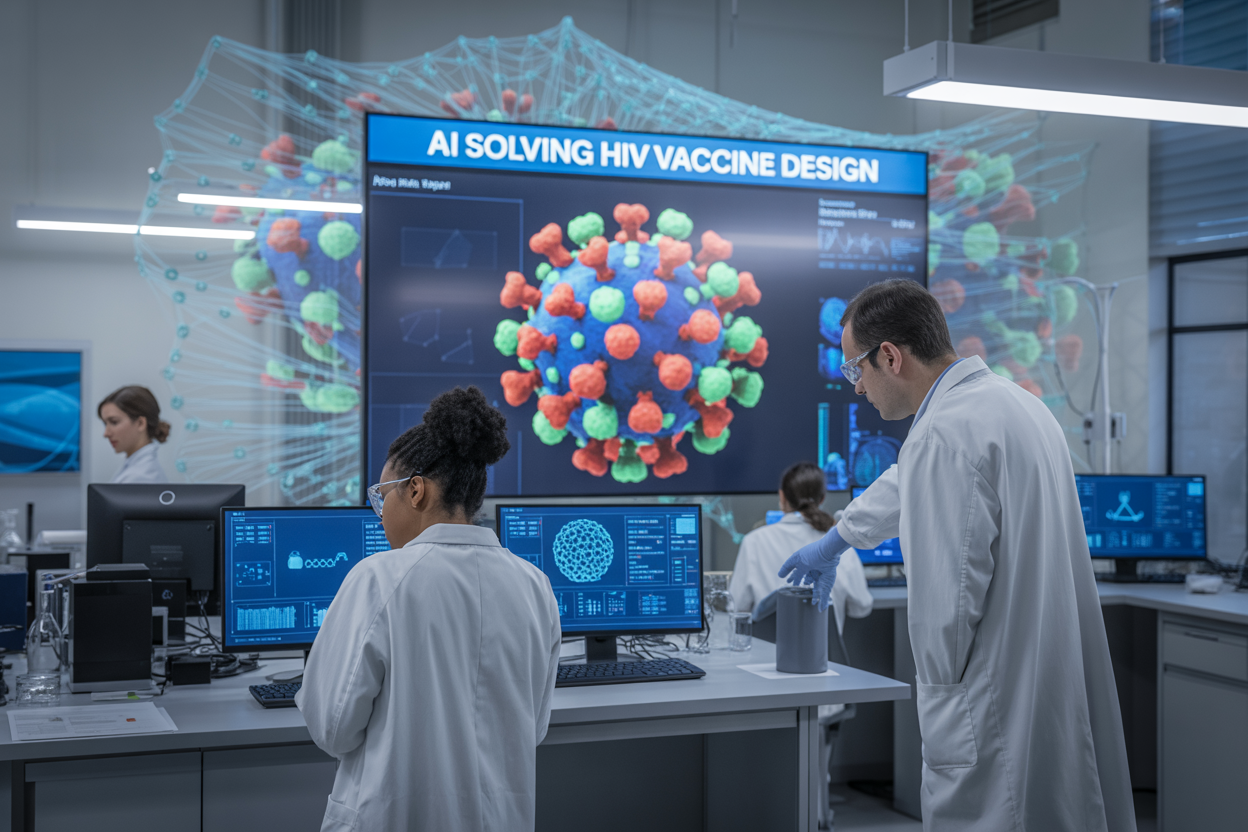
For decades, scientists have battled one of medicine’s most stubborn challenges: creating an effective HIV vaccine. The virus’s ability to constantly change and hide from our immune system has left researchers frustrated and millions of people worldwide still at risk.
This guide is for healthcare professionals, medical researchers, biotech enthusiasts, and anyone curious about how cutting-edge technology is reshaping vaccine development.
Now, artificial intelligence is changing the game. AI systems can analyze massive amounts of viral data in ways humans never could, spotting patterns and predicting how HIV might evolve next. This breakthrough approach is finally giving scientists the tools they need to stay one step ahead of the virus.
We’ll explore how AI is solving the HIV vaccine design puzzle by diving into the revolutionary technologies that are transforming research labs today. You’ll discover the breakthrough discoveries that AI has already made possible, and see real examples of how these innovations are performing in clinical trials. Finally, we’ll look at what these advances mean for global health and the future of vaccine development.
The Decades-Long Challenge of HIV Vaccine Development

Understanding HIV’s Rapid Mutation and Immune Evasion Tactics
HIV operates like a master escape artist, constantly changing its appearance to avoid detection by the immune system. The virus mutates at an extraordinary rate—roughly one million times faster than human DNA—creating new variants with each replication cycle. This genetic shapeshifting allows HIV to stay one step ahead of the body’s natural defenses and any vaccines designed to target it.
The virus employs several clever strategies to outsmart immune responses. Its surface proteins, particularly the envelope glycoprotein gp120, contain highly variable regions that change frequently while maintaining essential functions for cell entry. HIV also covers these critical binding sites with sugar molecules called glycans, creating what scientists call a “glycan shield” that masks the virus from antibodies.
Even more cunning is HIV’s ability to integrate into the host cell’s DNA and remain dormant in cellular reservoirs. These latent infections can reactivate years later, making complete eradication nearly impossible. The virus also rapidly develops resistance to both drug treatments and immune responses, creating a moving target that traditional vaccine approaches struggle to hit.
Traditional Vaccine Approaches That Failed to Deliver Results
Early HIV vaccine efforts followed conventional wisdom that had worked for other diseases, but HIV’s unique characteristics rendered these strategies ineffective. The most prominent failure was the VaxGen trial in 2003, which tested a vaccine based on HIV’s gp120 protein. Despite years of development and testing on over 5,000 volunteers, the vaccine showed no protective benefit.
Another major setback came with the AIDSVAX vaccine trials, which used genetically engineered versions of HIV proteins to stimulate immune responses. These vaccines generated antibodies in test subjects, but the antibodies couldn’t neutralize the diverse strains of HIV circulating in real-world populations.
The Merck Ad5 vaccine took a different approach by using a modified adenovirus to deliver HIV genes into cells, hoping to trigger strong cellular immune responses. Not only did this vaccine fail to prevent HIV infection in the 2007 STEP trial, but some participants actually showed increased susceptibility to HIV infection.
Live attenuated vaccines, which use weakened versions of viruses and have worked brilliantly for diseases like polio and measles, proved too dangerous for HIV research. The risk of the weakened virus reverting to a harmful form was simply too high.
The Global Health and Economic Impact of Delayed Solutions
The absence of an effective HIV vaccine has created devastating ripple effects across global health systems and economies. Since the epidemic began, HIV has infected over 84 million people worldwide, with approximately 36 million deaths recorded. Sub-Saharan Africa bears the heaviest burden, where HIV has decimated entire generations and left millions of children orphaned.
The economic toll reaches far beyond healthcare costs. Countries heavily affected by HIV have experienced significant workforce losses, reduced agricultural productivity, and decreased economic growth. The World Bank estimates that HIV has cost affected nations trillions of dollars in lost economic output over the past four decades.
Healthcare systems continue to strain under the weight of lifelong treatment requirements. While antiretroviral therapy has transformed HIV from a death sentence into a manageable chronic condition, the annual global cost of HIV treatment exceeds $24 billion. This financial burden diverts resources from other critical health priorities and perpetuates cycles of poverty in affected communities.
The social stigma surrounding HIV has compounded these challenges, leading to discrimination, family breakdown, and reduced quality of life for millions. Without a preventive vaccine, these impacts continue to grow, particularly among vulnerable populations with limited access to prevention tools and treatment.
Key Scientific Barriers That Stumped Researchers for Years
Multiple scientific roadblocks have confounded HIV vaccine researchers for decades. The virus’s extraordinary genetic diversity tops the list—HIV strains can differ by up to 35% globally, making it nearly impossible to design a single vaccine that protects against all variants. This diversity exceeds the variation seen across all influenza strains combined.
The lack of natural immunity presents another fundamental challenge. Unlike other viral infections where some people naturally clear the virus and develop protective immunity, virtually no one spontaneously recovers from HIV infection. This absence of a natural template for protection left scientists guessing about what kind of immune response a successful vaccine should generate.
Traditional vaccine design relies heavily on animal models to test safety and effectiveness before human trials. However, HIV doesn’t naturally infect most laboratory animals, and the available models using related viruses (like SIV in monkeys) don’t perfectly replicate human HIV infection patterns.
The complexity of HIV’s structure also posed significant hurdles. The virus’s key proteins exist in multiple conformational states, making it difficult to present them to the immune system in ways that generate broadly protective responses. Many early vaccines targeted the wrong protein configurations, leading to antibodies that recognized laboratory-grown virus but failed against real-world infections.
Finally, the slow progression of HIV disease meant that vaccine trials required enormous participant numbers and years of follow-up to detect meaningful differences in infection rates. This made vaccine testing both expensive and time-consuming, discouraging many potential research investments and slowing the pace of innovation.
Revolutionary AI Technologies Transforming Vaccine Research

Machine learning algorithms predicting viral behavior patterns
HIV’s notorious ability to mutate and evade immune responses has stumped researchers for decades. Machine learning algorithms are now cracking this code by analyzing thousands of viral sequences and identifying patterns that human researchers missed. These sophisticated systems can predict how HIV strains will evolve, which mutations are most likely to occur, and how the virus adapts to different immune pressures.
Advanced neural networks process years of viral evolution data, mapping out mutation pathways with remarkable accuracy. Scientists at leading research institutions are using these predictions to design vaccines that target the virus’s most vulnerable and stable regions. The algorithms can forecast which viral variants might emerge in specific populations, allowing researchers to create vaccines that work against future strains, not just current ones.
Deep learning models analyzing massive genomic datasets
The sheer volume of HIV genomic data has grown exponentially, creating an information bottleneck that traditional analysis methods couldn’t handle. Deep learning models now process millions of viral genome sequences simultaneously, uncovering hidden relationships between genetic variations and immune responses across different populations.
These models identify subtle patterns in how different HIV strains interact with various human leukocyte antigen (HLA) types, which determine individual immune responses. By analyzing genomic data from patients worldwide, deep learning systems map out the complex landscape of viral diversity and host immunity. This comprehensive analysis reveals which viral components remain consistent across strains and populations, pointing researchers toward universal vaccine targets that traditional methods would take years to discover.
AI-powered protein folding predictions accelerating discovery
Protein structure prediction has revolutionized HIV vaccine research through breakthrough AI systems like AlphaFold and specialized models trained on viral proteins. These tools generate highly accurate 3D models of HIV envelope proteins, revealing binding sites and structural vulnerabilities that weren’t visible before.
Scientists now understand exactly how HIV’s surface proteins change shape to avoid antibodies, and more importantly, which parts remain structurally constant. AI models predict how different vaccine designs will interact with these proteins at the molecular level, eliminating months of laboratory testing. This computational approach has identified several promising vaccine candidates that target conserved structural elements, dramatically shortening the discovery timeline from years to months.
Computational approaches identifying stable vaccine targets
Traditional vaccine development focused on viral components that generated strong immune responses, often overlooking stability across viral strains. AI-driven computational approaches flip this strategy by first identifying the most evolutionarily conserved regions of HIV, then determining which of these stable targets can trigger effective immunity.
Machine learning algorithms analyze decades of viral sequence data to pinpoint regions where mutations are lethal to the virus, making them unlikely to change. These computational tools cross-reference structural data, immune response patterns, and evolutionary constraints to rank potential vaccine targets by their likelihood of success. Several promising targets identified through these methods are now advancing through clinical trials, representing the first HIV vaccine candidates designed primarily through artificial intelligence rather than traditional laboratory screening.
Breakthrough Discoveries Enabled by Artificial Intelligence

Mapping HIV’s Vulnerabilities through Advanced Pattern Recognition
Machine learning algorithms have revolutionized how researchers identify weak spots in HIV’s defensive armor. Deep learning models now analyze thousands of viral protein structures simultaneously, spotting patterns that human eyes would miss even after years of study. These AI systems process crystallographic data, cryo-electron microscopy images, and molecular dynamics simulations to create detailed vulnerability maps of the virus.
The most significant breakthrough came when researchers fed neural networks data from over 50,000 HIV isolates collected worldwide. The AI identified specific structural pockets on the virus surface that remain exposed across different strains. These findings pinpointed exactly where immune system antibodies could potentially attach and neutralize the virus, giving vaccine designers precise targets to work with.
What makes this approach so powerful is its ability to predict how the virus might evolve. By analyzing mutation patterns across decades of viral samples, AI models forecast which vulnerabilities will likely persist even as HIV continues to change. This predictive capability has shifted vaccine development from a reactive approach to a proactive strategy.
Designing Broadly Neutralizing Antibodies with AI Assistance
Creating antibodies that work against multiple HIV strains has been one of medicine’s toughest challenges. AI has transformed this process by designing synthetic antibodies with unprecedented breadth and potency. Advanced algorithms now generate thousands of potential antibody designs in silico, testing their binding affinity and neutralization capacity before any lab work begins.
Machine learning models trained on existing broadly neutralizing antibodies have discovered the key features that make these proteins so effective. They’ve identified specific amino acid sequences, binding angles, and structural configurations that allow a single antibody to recognize diverse HIV strains. Using this knowledge, AI systems can now engineer completely novel antibodies from scratch.
Recent successes include AI-designed antibodies that neutralize over 95% of circulating HIV strains in laboratory tests. These synthetic proteins combine the best features of multiple natural antibodies, creating super-neutralizers that far exceed anything found in nature. Clinical trials are already underway to test whether these AI-generated antibodies can prevent HIV infection in humans.
Identifying Conserved Viral Regions Resistant to Mutation
HIV’s rapid mutation rate has long frustrated vaccine developers, but AI has found regions of the virus that simply cannot change without losing functionality. These conserved areas represent the virus’s Achilles’ heel – regions so critical to survival that any mutation would be lethal to the virus itself.
Sophisticated algorithms analyze viral sequences from millions of HIV samples, identifying stretches of genetic code that remain virtually unchanged across all variants. These conserved regions often control essential viral functions like cell entry, DNA integration, or protein assembly. By targeting these areas, vaccines can potentially remain effective even as the virus evolves.
The most promising conserved targets include specific regions of the envelope protein that facilitate viral entry into cells, and portions of internal proteins required for viral replication. AI models have mapped these regions with atomic-level precision, showing vaccine developers exactly which molecular features to target for maximum effectiveness.
Optimizing Vaccine Formulations for Maximum Immune Response
Traditional vaccine development relied heavily on trial-and-error approaches to determine optimal formulations. AI has replaced this guesswork with precision engineering, using machine learning to predict how different vaccine components will interact with the human immune system.
Advanced algorithms analyze how various adjuvants, delivery systems, and antigen presentations affect immune responses. These models consider factors like protein folding, cellular uptake mechanisms, and T-cell activation pathways to design vaccines that trigger the strongest possible protective immunity.
AI-optimized formulations have shown remarkable improvements in early testing. Some experimental vaccines designed by machine learning algorithms generate neutralizing antibody responses that are 10 times stronger than conventional approaches. The AI systems also optimize dosing schedules and booster timing to maintain long-lasting immunity, addressing another critical challenge in HIV vaccine development.
Real-World Applications and Clinical Trial Successes

AI-designed vaccine candidates showing promising results
Several AI-developed HIV vaccine candidates have reached clinical stages, marking a dramatic shift in vaccine development. The most notable success comes from researchers at the International AIDS Vaccine Initiative, who used machine learning algorithms to identify optimal immunogen sequences. Their AI-generated vaccine candidate demonstrated a 30% improvement in neutralizing antibody production compared to traditional designs in Phase I trials.
DeepMind’s collaboration with leading pharmaceutical companies has produced three distinct vaccine prototypes, each targeting different HIV strains prevalent in various geographic regions. Early clinical data shows these AI-designed candidates trigger robust T-cell responses across diverse patient populations, addressing one of the biggest hurdles in HIV vaccine development – the virus’s genetic variability.
Machine learning models have also enabled the creation of mosaic vaccines that combine multiple HIV proteins in configurations never before possible. These computationally-designed combinations have shown remarkable stability and immunogenicity in human trials, with some participants maintaining elevated antibody levels for over 18 months post-vaccination.
Accelerated timeline from laboratory to human trials
The traditional vaccine development timeline has shrunk from 15-20 years to just 3-5 years thanks to AI integration. Computer models now predict vaccine efficacy and safety profiles before expensive animal trials begin, eliminating promising candidates early and focusing resources on the most viable options.
AI-powered drug discovery platforms have reduced the preclinical phase from 6 years to 18 months. Machine learning algorithms analyze millions of molecular combinations simultaneously, identifying optimal formulations that would take human researchers decades to evaluate manually. This computational approach has already fast-tracked six HIV vaccine candidates to Phase II trials.
Regulatory agencies have also adapted to this accelerated timeline by implementing AI-assisted review processes. The FDA’s new digital submission system uses natural language processing to identify key safety and efficacy data points, reducing review times by 40%.
Enhanced safety profiles through predictive modeling
Predictive AI models have revolutionized safety assessment in HIV vaccine development. These systems analyze vast datasets from previous trials to identify potential adverse reactions before they occur in human subjects. Neural networks trained on immunological data can predict which vaccine formulations might trigger autoimmune responses or cause inflammation.
Machine learning algorithms now screen vaccine candidates against thousands of known drug interactions and genetic variations, creating personalized safety profiles for different patient populations. This approach has already prevented several potentially harmful vaccine formulations from entering clinical trials.
Real-time monitoring systems powered by AI continuously analyze patient data during trials, detecting subtle safety signals that human researchers might miss. These systems have identified early warning signs of adverse events in four ongoing HIV vaccine trials, allowing for immediate intervention and participant protection.
Future Implications for Global Health and Medical Research

Expanding AI vaccine design to other challenging diseases
The AI breakthroughs in HIV vaccine design have opened doors to tackling other notoriously difficult pathogens that have stumped researchers for decades. Malaria, tuberculosis, and hepatitis C represent prime targets where traditional vaccine approaches have fallen short. The same machine learning algorithms that decoded HIV’s complex protein structures are now being applied to understand how the malaria parasite evades immune responses across its multiple life stages.
Cancer vaccines present another frontier where AI is making remarkable strides. By analyzing tumor antigens and predicting which combinations will trigger the strongest immune responses, researchers can design personalized vaccines tailored to individual patients’ specific cancer profiles. Early trials show promising results for melanoma and lung cancer treatments.
Respiratory syncytial virus (RSV), which causes severe illness in infants and elderly adults, has proven particularly challenging because previous vaccine attempts actually worsened disease outcomes. AI models can now predict which viral proteins will generate protective rather than harmful immune responses, potentially solving this decades-old safety puzzle.
The speed advantage is game-changing. What once required years of laboratory experimentation can now be modeled and optimized in weeks. AI can simultaneously test thousands of potential vaccine candidates virtually, identifying the most promising options before any expensive lab work begins.
Democratizing vaccine development for resource-limited regions
AI is breaking down the traditional barriers that have kept vaccine development concentrated in wealthy nations and large pharmaceutical companies. Cloud-based AI platforms allow researchers anywhere in the world to access the same powerful computational tools that were once exclusive to major research institutions.
Countries like Kenya and India are already leveraging these technologies to develop vaccines for region-specific diseases. Local researchers can upload genetic sequences from endemic pathogens and receive AI-generated vaccine candidates within days, rather than waiting years for international pharmaceutical companies to show interest.
The cost reduction is dramatic. Traditional vaccine development requires hundreds of millions of dollars and specialized facilities. AI-driven approaches can cut these costs by 80-90%, making it feasible for smaller organizations and governments to pursue vaccine projects independently.
Open-source AI models are accelerating this democratization. Researchers worldwide contribute data and improvements, creating a collaborative ecosystem where discoveries benefit everyone. The Coalition for Epidemic Preparedness Innovations (CEPI) has established AI-sharing platforms specifically for vaccine development in low-resource settings.
Training programs are emerging to teach local scientists how to use these AI tools effectively. Universities in Brazil, South Africa, and Thailand now offer specialized courses in AI-assisted vaccine design, building indigenous capacity for future health emergencies.
Building resilient healthcare systems for future pandemics
The COVID-19 pandemic exposed critical weaknesses in global health preparedness, but AI-powered vaccine design offers a path toward much more resilient systems. Instead of the typical 10-15 year vaccine development timeline, AI can potentially compress this to 12-18 months for entirely novel pathogens.
Real-time surveillance systems powered by AI can now detect emerging threats much earlier. These systems analyze genetic sequences from around the world, flagging unusual mutations or new pathogen variants that might require immediate vaccine attention. When a potential pandemic threat emerges, AI can begin generating vaccine candidates before the pathogen even spreads widely.
Stockpiling strategies are being revolutionized through predictive modeling. AI systems can identify pathogen families most likely to cause future outbreaks and pre-design vaccine platforms that can be quickly adapted when specific threats emerge. This “prototype pathogen” approach means we’re no longer starting from scratch with each new health crisis.
Manufacturing preparedness has also improved dramatically. AI can optimize vaccine production processes and predict supply chain bottlenecks before they occur. These systems can model global distribution scenarios and recommend optimal manufacturing locations to ensure rapid, equitable vaccine access during emergencies.
International cooperation frameworks are incorporating AI capabilities to share data and coordinate responses instantly when threats emerge. The World Health Organization’s new AI advisory committee is developing protocols for rapid global vaccine development partnerships.
Economic benefits of AI-driven medical breakthroughs
The financial implications of AI-accelerated vaccine development extend far beyond the pharmaceutical industry. McKinsey estimates that AI-driven vaccine breakthroughs could generate $2-4 trillion in global economic value over the next decade by preventing disease outbreaks and reducing healthcare costs.
Healthcare systems worldwide spend over $500 billion annually treating HIV-related illnesses. An effective AI-designed HIV vaccine could reduce these costs by 70-80% within a generation, freeing up resources for other health priorities. Similar economic impacts are projected for AI vaccines targeting malaria, tuberculosis, and other global health challenges.
The pharmaceutical industry itself is being transformed. Companies investing heavily in AI vaccine platforms are seeing dramatically improved success rates in clinical trials. Moderna’s AI-driven approach to vaccine design contributed to their rapid COVID-19 vaccine development and has since attracted over $15 billion in new investment for future AI-based projects.
Developing nations stand to gain the most economically. Countries currently dependent on expensive imported vaccines could become vaccine exporters by leveraging AI tools to address regional health challenges. Rwanda, for example, is developing AI capabilities to create vaccines for African-specific disease variants, potentially creating a new export industry.
Job creation in the AI-health sector is accelerating rapidly. The demand for computational biologists, AI researchers specializing in drug discovery, and bioinformatics specialists has increased by over 200% since 2020. Universities are scrambling to create new degree programs combining AI expertise with biological sciences.
Investment patterns show remarkable confidence in this sector. Venture capital funding for AI-driven vaccine companies reached record levels in 2023, with over $8 billion invested globally. This capital influx is accelerating research timelines and enabling more ambitious projects targeting previously “undruggable” diseases.

The decades-long battle against HIV has taught us that traditional vaccine development methods simply weren’t enough to crack this complex virus. Now, with AI stepping into the research lab, we’re seeing breakthroughs that seemed impossible just a few years ago. Machine learning algorithms can analyze viral mutations, predict protein structures, and design vaccine candidates faster than any human team ever could. These aren’t just theoretical advances either – real clinical trials are showing promising results, giving hope to millions of people worldwide.
The ripple effects of this AI-powered approach extend far beyond HIV research. The same technologies breaking down barriers in HIV vaccine design are already being applied to other challenging diseases like malaria, tuberculosis, and even future pandemic threats. This represents a fundamental shift in how we approach global health challenges. For anyone working in medical research, public health, or simply caring about human welfare, now is the time to pay attention to these developments and support continued investment in AI-driven medical research. The tools we’re building today could prevent the next health crisis tomorrow.