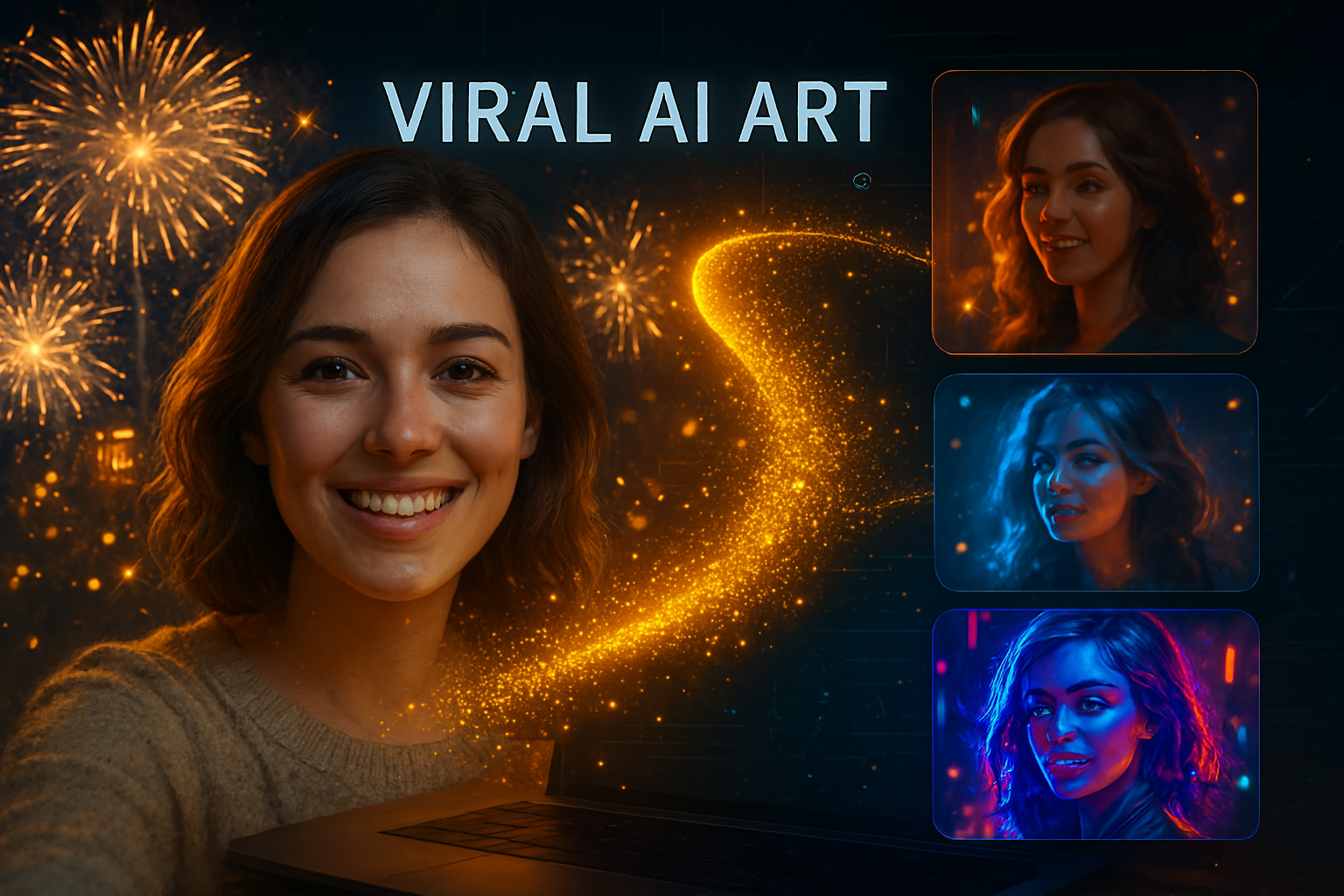
We’ve all been there: wrestling with complex photo editing software or cycling through disappointing AI filters that never quite capture the vision in our heads. The process is often tedious, and the results can feel artificial. But what if editing a photo was as simple as describing what you want? As of January 2026, that’s no longer a hypothetical. Google’s new AI image model—nicknamed “Nano Banana” and powered by the Gemini 2.5 Flash and the higher-tier Gemini 3 Pro engines—isn’t just another tool; it’s a creative partner. It feels less like software and more like magic. This article explores the most mind-blowing features of this new technology, revealed through its 2026 New Year prompts, which are available for free right now in the Gemini App.
1. It Doesn’t Just Edit Photos—It Understands Physics
Unlike previous tools that simply overlay effects, this AI grasps the physical relationships between objects in the real world. A perfect illustration is the “Surreal Giant 2026 Inflatables” prompt. The AI can add massive inflatables into a room that realistically “press against the walls and floor.” This is the leap from simple pixel-pushing to genuine spatial awareness. The model understands how a pressurized object would deform when constrained by its environment, as detailed in the prompt:
“Each digit is a separate oversized glossy red inflatable, far larger than human size, pressing against the walls and floor with realistic air pressure deformation”.
But the model’s intelligence isn’t just logical; it’s also artistic.
2. It’s a Master of Style, from 90s Nostalgia to Digital Art
The AI demonstrates an incredible versatility in applying diverse and complex artistic and photographic styles to an existing photo, transforming its entire mood and medium. Its range is showcased through a variety of creative prompts:
• The “Retro 90s House Party” prompt applies a “1998 disposable camera” aesthetic, complete with “raw, unfiltered… chaos” and “authentic film grain.”
• The “Chiaroscuro Night Transformation” prompt can convert a daytime photo into a dramatic night scene, creating an “intense chiaroscuro effect” with “harsh, directional light.”
• The “Isometric 3D Voxel Scene” prompt can completely rebuild a selfie in a “‘Minecraft’ pixel art style,” rendering the entire scene as “perfectly aligned 3D blocks.”
While mastering any given style is impressive, the AI’s true creative power lies in its ability to completely re-imagine the context of a photo.
3. It Can Place You “Behind the Scenes” of Your Own Life
This AI can re-contextualize an image in highly imaginative ways, treating the original photo as just one element in a much larger scene. The “Movie Set Behind-the-Scenes” prompt is a prime example of this capability. It can keep you in your exact position from the original photo but build an entire film set around you, complete with “technical equipment, studio lighting, and ambient motion of a film crew.” This is where the AI transitions from image editor to co-conspirator in your creative process, transforming a static memory into a dynamic story.
4. You Can Edit with Conversation, Not Clicks
Perhaps the most user-friendly feature is the ability to refine images through simple, conversational dialogue. This completely removes the need for manual masking, selection tools, or fiddling with complex sliders. If the AI’s first attempt isn’t exactly what you wanted, you don’t have to start over; you can just chat with it to make precise changes. The interaction is as simple as typing a request.
The process is flexible, allowing for refinements like, “Make the confetti more golden,” or you can give precise instructions like, “Keep the hair exactly like the original” to lock in details you love.
A New Era for Personal Creativity
This isn’t just an upgrade; it’s a new paradigm. We’re moving beyond the tedious era of manual, click-based editing and into an exciting frontier of intuitive, conversational creation. These powerful “Nano Banana” tools, which demonstrate a deep understanding of physics, style, and context, are not locked away in a research lab; they are accessible for free through the Gemini App. The barrier between an idea and its execution has never been lower.
When your imagination is the only limit, what will you create first?