
Your mom calls asking for emergency money to get out of jail. Her voice sounds exactly right—panicked, desperate, completely real. But she’s actually sitting safely at home, and you’re about to become the latest victim of the “Hello, Mom” scam.
This guide is for anyone with elderly parents, teenagers, or family members who might fall for sophisticated voice cloning scams. AI technology now lets scammers clone your family’s voice in seconds using just a few audio clips from social media videos or voicemails.
We’ll break down how voice cloning technology works and why these scams spread so fast. You’ll learn the specific warning signs that help you spot fake emergency calls before sending money. Most importantly, we’ll share bulletproof protection strategies and technology solutions that keep your family safe from these increasingly common voice scams.
Understanding Voice Cloning Technology and Its Rapid Evolution

How AI Voice Synthesis Works in Simple Terms
Voice cloning technology breaks down human speech into digital patterns that computers can understand and recreate. Think of it like teaching a machine to become a vocal impersonator, but with surgical precision.
The process starts with audio samples – sometimes just a few minutes of someone talking. AI algorithms analyze everything from pitch and tone to breathing patterns and speech rhythms. These systems identify the unique “vocal fingerprint” that makes your voice distinctly yours.
Modern AI then builds a mathematical model of that voice, capturing thousands of micro-details that our ears process unconsciously. When generating speech, the system references this model to produce new words and sentences that sound authentically like the original speaker, even if they never said those words.
The technology relies on deep learning networks that have been trained on millions of hours of human speech. These networks understand not just how words should sound, but how emotions, stress, and context change vocal delivery.
Why Voice Cloning Has Become Accessible to Criminals
The democratization of AI tools has put sophisticated voice cloning technology within reach of anyone with a smartphone and internet connection. What once required expensive equipment and technical expertise now operates through user-friendly apps and online platforms.
Many voice synthesis services market themselves as legitimate tools for content creators, audiobook narrators, and businesses. However, these same platforms inadvertently provide scammers with professional-grade cloning capabilities. Some services require minimal verification, allowing criminals to create convincing voice replicas without oversight.
The cost barrier has essentially disappeared. Basic voice cloning can be accomplished for free using open-source software, while premium results cost just a few dollars. This accessibility means organized crime groups can deploy voice scams at scale without significant investment.
Cloud computing has amplified the problem by providing criminals with powerful processing capabilities on-demand. They don’t need to own expensive hardware – they can rent computing power by the hour to generate thousands of fake voice samples.
The Shocking Speed of Modern Voice Replication
Current voice cloning technology can produce convincing replicas from audio samples as short as 10-15 seconds. Some advanced systems claim effectiveness with just 3-5 seconds of clear speech, roughly the length of a typical voicemail greeting or social media video.
Real-time voice conversion represents the cutting edge of this technology. These systems can transform one person’s voice into another’s during live phone calls, creating the illusion of authentic conversation in real-time. The processing delay is often imperceptible, making detection nearly impossible during normal conversation.
The quality gap between amateur and professional results continues to shrink rapidly. Voice clones that would have sounded robotic just two years ago now exhibit natural speaking patterns, including realistic pauses, emotional inflections, and even background noise characteristics.
Training times have plummeted from days to minutes. Advanced algorithms can now process voice samples and generate working models in under an hour, meaning criminals can move from obtaining audio samples to launching scam calls within the same day.
Real-World Examples of Voice Cloning Attacks
A Hong Kong finance worker transferred $25 million after participating in a video call where scammers used AI to clone his company’s chief financial officer and other colleagues. The fake meeting included multiple cloned voices and appeared completely legitimate until the fraud was discovered later.
In Arizona, scammers cloned a mother’s voice using audio from her social media posts, then called her daughter demanding ransom money. The daughter was convinced she was hearing her actual mother in distress, despite the mother being safely at work during the call.
UK bank customers reported receiving calls from convincing replicas of their bank’s customer service representatives, complete with proper terminology and account details obtained through other breaches. The cloned voices made fraudulent requests for additional verification information that seemed entirely legitimate.
Family emergency scams have become particularly sophisticated, with criminals cloning grandchildren’s voices to target elderly relatives. These attacks often incorporate personal details gathered from social media to create compelling narratives about accidents, arrests, or medical emergencies requiring immediate financial assistance.
Voice cloning has been used to manipulate stock prices through fake audio statements attributed to company executives, demonstrating how this technology threatens not just individuals but entire market systems.
Anatomy of the Hello Mom Scam
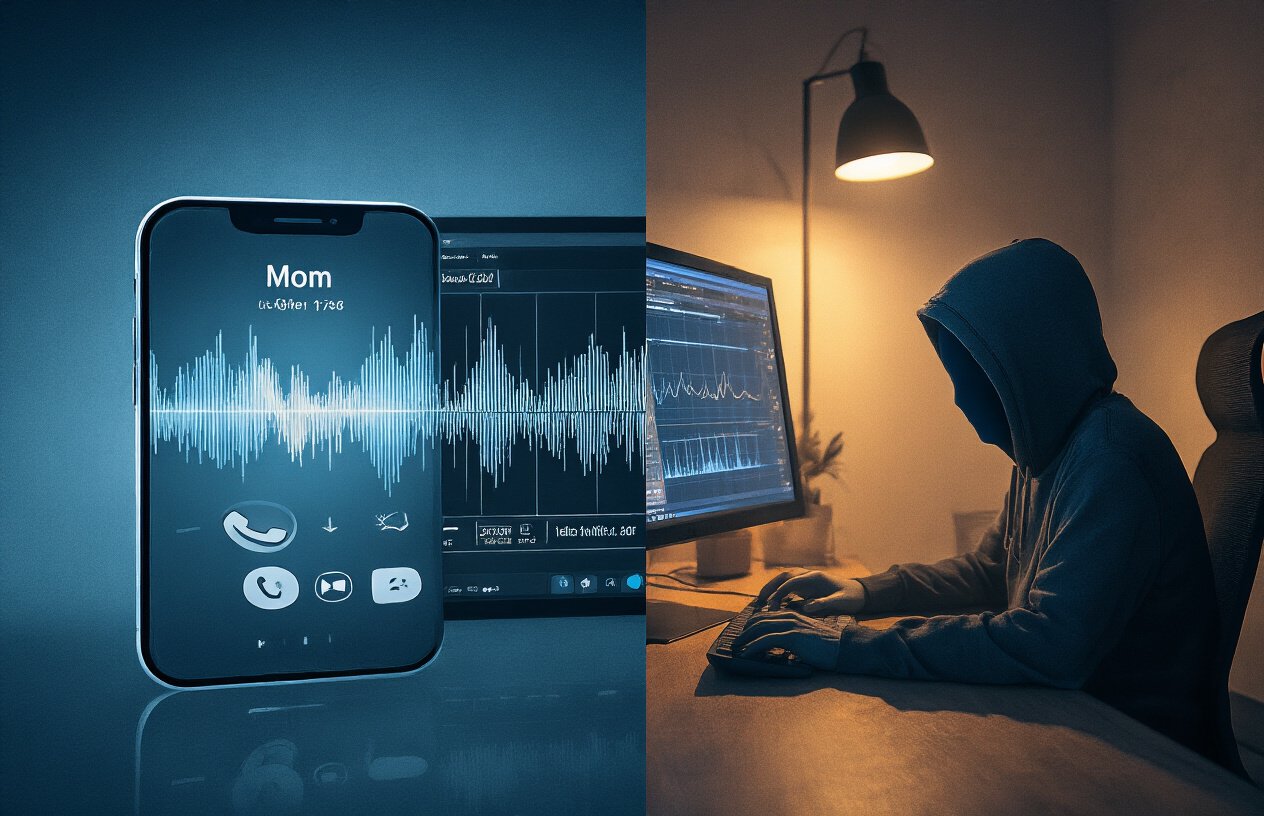
How Scammers Obtain Voice Samples from Social Media
Voice cloning technology needs surprisingly little audio to create a convincing fake – sometimes just 10-15 seconds of clear speech. Scammers harvest these samples from the digital footprints your family members leave everywhere online. They scroll through Facebook videos where your daughter talks about her new job, Instagram stories where your son shares weekend plans, or TikTok posts featuring family conversations.
LinkedIn professional videos are goldmines for scammers because people speak clearly and formally – perfect training data for AI voice models. Even voicemails posted as jokes or birthday messages on social platforms provide enough material. Video calls shared publicly, podcast appearances, and YouTube comments with voice responses all become ammunition.
The scariest part? Scammers don’t need recent recordings. That graduation speech your child posted three years ago works just fine. They’re also mining business conference recordings, school board meeting livestreams, and virtual wedding toasts that families proudly share online.
The Emotional Manipulation Tactics Used Against Families
Scammers weaponize your deepest parental instincts by creating artificial crisis situations. They call during peak stress hours – early morning or late evening – when your critical thinking abilities are naturally lower. The fake voice will sound panicked, maybe crying, claiming they’re in jail, had an accident, or are being threatened.
The conversation moves fast by design. Scammers create urgency to prevent you from thinking clearly or asking probing questions. They’ll say things like “Mom, please don’t hang up” or “Dad, I need you to listen carefully” to keep you engaged. The cloned voice might claim their phone is damaged or they’re using someone else’s device to explain any audio inconsistencies.
Professional con artists study family dynamics through social media to personalize their approach. They know your child’s college, recent travels, friend groups, and ongoing life situations. This insider knowledge makes their emergency scenarios feel authentic and increases panic levels.
Common Scenarios and Scripts Scammers Employ
The “arrest scenario” remains the most popular script. Your cloned child calls claiming they’ve been arrested for DUI, hit-and-run, or drug possession. They beg you not to tell anyone – especially your spouse – and insist they need bail money immediately. A fake lawyer or police officer often takes over the call to add legitimacy.
Medical emergencies represent another devastating angle. The voice clone might claim they’re in the hospital after an accident, need money for treatment not covered by insurance, or are stuck somewhere without their wallet after a medical episode. The emotional weight of these scenarios often overwhelms logical thinking.
International travel scams exploit families with college-aged children. The fake voice claims they’re stranded abroad after being robbed, their passport was stolen, or they missed their flight home. These scenarios feel plausible because young adults frequently travel and encounter unexpected situations.
Kidnapping hoaxes have become increasingly sophisticated. Scammers play background noise suggesting struggle or confinement while the cloned voice pleads for help. They demand immediate ransom payments and threaten dire consequences if parents contact authorities or delay payment.
Why Elderly Parents Are Primary Targets
Older adults grew up trusting phone conversations as authentic communication. They lack the digital native skepticism younger generations developed around online scams. When they hear their grandchild’s voice, their protective instincts override technological suspicions.
Elderly people often have readily accessible savings accounts, retirement funds, and less complex financial monitoring systems. They’re more likely to have cash available for immediate wire transfers or gift card purchases that scammers prefer.
Social isolation makes older adults more vulnerable to emotional manipulation. Limited daily human contact means a distressed call from family creates powerful urgency to help. Their fear of disappointing family members or missing a real emergency outweighs caution about potential fraud.
Age-related hearing changes can actually work in scammers’ favor. Slight audio distortions from voice cloning technology might seem like normal phone connection issues rather than red flags. The emotional content of the call overshadows technical quality concerns.
Warning Signs Your Family Should Never Ignore

Unexpected emergency calls demanding immediate money
The classic “hello mom” scam always follows the same playbook – manufactured urgency combined with financial desperation. Your loved one’s cloned voice will call claiming they’re in jail, stranded somewhere without their wallet, or facing an immediate medical emergency that requires cash right now. The scammers know that panic clouds judgment, so they pile on emotional pressure with phrases like “I only get one phone call” or “they said if I don’t pay today, something terrible will happen.”
Pay attention to timing patterns. These calls frequently happen during business hours when banks are open and wire transfers can be processed immediately. Scammers also target elderly family members during mid-morning hours when younger relatives are typically at work and less likely to interrupt or verify the story. The urgency factor prevents victims from taking time to think critically or consult other family members who might spot the deception.
Real emergencies involving your family members almost never require immediate cash payments to strangers. Legitimate authorities, hospitals, and service providers have established billing procedures and rarely demand instant payment for emergency services.
Requests for unusual payment methods like gift cards
Gift cards, wire transfers, cryptocurrency, and prepaid debit cards are the scammer’s currency of choice because these payment methods are nearly impossible to trace or reverse. When someone claiming to be your family member asks you to rush to CVS, Target, or Walmart to buy hundreds of dollars in gift cards, every alarm bell should go off.
No legitimate emergency situation requires payment through gift cards. Bail bondsmen don’t accept iTunes cards. Hospitals don’t demand Amazon gift certificates. Towing companies don’t take Google Play credits. These payment methods exist in the scammer ecosystem because they can quickly convert them to untraceable cash.
Watch for specific language around these requests. Scammers often provide detailed instructions about which store to visit, which brand of gift card to purchase, and exactly how to read the card numbers over the phone. They might even claim they need gift cards because “the jail’s payment system is down” or “the doctor prefers this method for privacy reasons.” These explanations are always fabricated.
Wire transfer requests through Western Union or MoneyGram are equally suspicious, especially when the recipient is in a different state or country than where your family member claims to be located.
Caller refusing to answer specific personal questions
Legitimate family members can answer personal questions about shared memories, family details, and recent conversations. Voice cloning technology might replicate someone’s speech patterns, but it can’t replicate their memories or knowledge of intimate family details.
Test callers with questions only the real person would know. Ask about the last family gathering, their pet’s name, their favorite restaurant, or what you talked about during your most recent conversation. Go beyond basic information that might be available on social media profiles. Ask about childhood nicknames, embarrassing family stories, or inside jokes that wouldn’t be publicly known.
Scammers typically respond to personal questions with deflection techniques. They might claim they’re too upset to think clearly, say they hit their head and their memory is fuzzy, or insist there’s no time for questions because the situation is too urgent. Some will even get angry or emotional when pressed for specific details, hoping to guilt you into stopping the questioning.
Real family members, even in genuine emergencies, can usually provide some verification of their identity when directly asked. They understand your need to confirm it’s really them, especially when money is involved.
Pressure to keep the conversation secret from other family members
Scammers desperately need to isolate their victims from potential voices of reason. They’ll insist you can’t tell anyone else about the emergency because it’s “too embarrassing,” might “ruin their career,” or because they specifically trust only you to help them. This secrecy demand is one of the strongest red flags in voice cloning scams.
The pressure often comes with emotional manipulation. The fake family member might say things like “you’re the only one I can count on,” “please don’t disappoint me like everyone else has,” or “if mom finds out about this, it will kill her.” They’re weaponizing your relationships and emotions against your better judgment.
Legitimate emergencies don’t require family secrecy. Real relatives understand that major problems often need multiple family members working together to solve them. They won’t be offended if you want to conference in other relatives or take time to verify the situation with others who know them.
Create a family communication plan where everyone agrees that financial emergencies involving significant amounts of money will always involve at least two family members in the decision-making process. This simple rule can stop most voice cloning scams before any money changes hands.
Bulletproof Protection Strategies for Your Family

Establishing Secret Family Code Words for Emergencies
Every family needs a unique code word system that scammers can’t possibly know. Pick something personal and memorable – your first pet’s name combined with your childhood address number, or the nickname you had for your grandmother’s old car. The key is making it specific to your family history.
Create different levels of codes for different situations. A “yellow code” might signal mild concern, while a “red code” indicates genuine emergency. Share these codes only during in-person conversations, never over text or email where they could be intercepted.
Code Word Best Practices:
- Change them every 6-12 months
- Use words that flow naturally in conversation
- Make backup codes in case someone forgets the primary one
- Test them regularly during family gatherings
Creating Verification Protocols Before Sending Money
Money requests should trigger an automatic verification sequence, regardless of how desperate the caller sounds. Establish a rule where any financial request over $100 requires a callback to a known number after hanging up completely.
Create a verification checklist that family members must complete:
| Step | Action | Why It Matters |
|---|---|---|
| 1 | Hang up and wait 5 minutes | Breaks emotional manipulation |
| 2 | Call back on known number | Confirms identity through different channel |
| 3 | Ask personal questions only family knows | Tests authentic knowledge |
| 4 | Verify the emergency through another family member | Double-checks the story |
Train everyone to ask specific questions that only your real family member would know. “What did we have for dinner last time we ate together?” or “What’s the running joke about Dad’s driving?” These personal details are impossible for scammers to fake.
Educating Elderly Relatives About Voice Cloning Threats
Older family members often become primary targets because they’re less familiar with AI technology and more trusting of voice calls. Schedule regular conversations about these scams without making them feel paranoid or helpless.
Show them actual examples of voice cloning technology – play them audio samples online so they understand how realistic these fakes can sound. This isn’t about scaring them; it’s about building awareness of what’s possible.
Practical Steps for Elderly Protection:
- Program all family phone numbers with clear contact names
- Practice saying “I’ll call you back” for any urgent requests
- Create a buddy system with trusted neighbors or friends
- Set up caller ID on their phone with large, readable text
- Teach them to recognize emotional manipulation tactics
Role-play scenarios during family visits. Make it feel like a game rather than a lecture. Have them practice responding to fake emergency calls with phrases like “Let me verify this with another family member first.”
Most importantly, reassure them that taking time to verify isn’t being mean or untrusting – it’s being smart and protecting the whole family.
Technology Solutions That Shield Against Voice Scams

Call Verification Apps and Their Effectiveness
Truecaller and Hiya lead the pack when it comes to identifying suspicious calls before you pick up. These apps maintain massive databases of known scammer numbers and can instantly flag potentially fraudulent calls. Truecaller’s premium version offers real-time caller verification, while Hiya provides excellent spam blocking for both iOS and Android devices.
For families serious about protection, consider apps like CallApp or Should I Answer. These platforms crowdsource scam reports from millions of users, creating a constantly updated shield against new threats. The effectiveness varies by region, but most users report 70-80% success rates in blocking unwanted calls.
The key limitation? These apps struggle with spoofed numbers – exactly what voice cloning scammers prefer. They’re excellent for blocking known bad actors but won’t catch sophisticated criminals using legitimate-looking phone numbers.
Setting Up Family Communication Security Systems
Create a family authentication protocol that scammers can’t replicate. Establish secret words, phrases, or questions that only family members know. Maybe it’s your childhood pet’s name, the street where grandma lived, or a funny inside joke from last Christmas.
Signal and WhatsApp offer excellent encrypted messaging with disappearing messages. Set up family group chats where members can quickly verify suspicious calls. When someone receives an emergency call, they immediately post in the group chat: “Did Mom really call asking for money?”
Consider implementing a “trust but verify” system. If someone calls claiming to be family and asking for help, hang up and call them back on their known number. Real emergencies can wait two minutes for verification.
Using Caller ID and Call Blocking Features Strategically
Most smartphones now include powerful built-in blocking features that many people ignore. iPhone’s “Silence Unknown Callers” sends calls from numbers not in your contacts straight to voicemail. Android’s Call Screen feature lets Google Assistant answer suspicious calls first.
Set up custom ringtones for family members so you instantly know when legitimate calls come through. Unknown numbers get a different ring or vibration pattern, immediately putting you on alert.
For landlines, consider services like Nomorobo, which blocks robocalls before they reach you. Many phone companies now offer free spam blocking services – AT&T Call Protect, Verizon Call Filter, and T-Mobile Scam Shield provide solid first-line defense.
Create a family whitelist of approved numbers. Any call outside this list gets extra scrutiny, especially if it claims to be from family or involves urgent requests.
Implementing Two-Factor Authentication for Family Emergencies
Develop a two-step verification process for any urgent money requests or sensitive information sharing. The first contact might come by phone, but confirmation requires a different communication method – text, email, or video call.
Video calls remain the gold standard for verification since current AI can’t yet clone real-time video convincingly. FaceTime, Google Meet, or WhatsApp video calls provide immediate visual confirmation of identity.
Set up emergency contact protocols where family members must provide two forms of verification before anyone acts on urgent requests. This might include answering personal questions and confirming through a secondary device or family member.
Bank accounts and financial apps should require additional authentication for transfers above certain amounts. Most banks offer text or email confirmations for transactions over $500 – use these features religiously.
Consider shared password managers like 1Password or Bitwarden for families. These tools can generate unique emergency codes that rotate monthly, providing another layer of verification that scammers can’t possibly know.
What to Do If Your Family Falls Victim

Immediate Steps to Take After Discovering the Scam
Time moves fast when you realize your family member has been tricked by a voice cloning scam. First, contact your bank and credit card companies right away to freeze any accounts that might have been compromised. Even if money wasn’t sent directly from these accounts, scammers often use the initial success to attempt additional fraud.
Document everything you can remember about the incident. Write down the exact time the call happened, what the fake voice said, how much money was requested, and any phone numbers that appeared on caller ID. Take screenshots of any text messages or emails related to the scam. This information becomes crucial evidence for both law enforcement and your financial institutions.
If money was already sent through wire transfer, gift cards, or cryptocurrency, contact those services immediately. While recovery chances are slim, some companies can occasionally stop transfers that haven’t been fully processed yet. For gift cards, contact the retailer’s fraud department with the card numbers and purchase receipts.
Change passwords for all financial accounts and enable two-factor authentication where possible. Scammers who successfully target one family member often have additional personal information they can use for identity theft or future attacks.
How to Report Voice Cloning Fraud to Authorities
Start by filing a report with your local police department, even though they might not be equipped to investigate high-tech fraud directly. Having a police report number helps with other agencies and provides official documentation of the crime.
Contact the FBI’s Internet Crime Complaint Center (IC3) at ic3.gov within 24-48 hours. Voice cloning scams fall under their jurisdiction for cybercrime, and they track these incidents nationally to identify patterns and major criminal organizations.
Report the incident to the Federal Trade Commission through their fraud reporting website at reportfraud.ftc.gov. The FTC uses this data to issue consumer alerts and coordinate with other agencies on enforcement actions.
If the scam involved phone services, file a complaint with the Federal Communications Commission (FCC). They’re increasingly focused on combating spoofing and robocall fraud, which often overlap with voice cloning schemes.
For financial fraud aspects, contact your state’s attorney general office. Many states have specialized fraud units that work closely with banks and financial institutions to track money movement in these scams.
Protecting Your Family from Repeat Targeting
Scammers often circle back to families they’ve successfully targeted before, sometimes waiting months between attempts. They may have recorded your family member’s voice during the original scam call, creating an even more convincing clone for future use.
Establish a family code word system that everyone memorizes. This secret phrase should be something only your immediate family knows and isn’t posted anywhere on social media. When someone calls claiming to be in an emergency, ask for the code word before taking any action.
Scrub your family’s social media presence of voice content. Remove videos where family members speak clearly, especially children whose voices are easier to clone with smaller data samples. Review privacy settings to ensure posts aren’t visible to strangers who might harvest audio content.
Consider using a family communication app like Life360 or Find My Friends that shows real-time locations. When someone calls claiming a family member is in trouble, you can quickly verify their actual location.
Set up account alerts for all bank and credit card accounts. Many financial institutions offer real-time notifications for any transaction over a amount you specify. This creates an early warning system if scammers attempt repeat fraud.
Supporting Family Members Who Were Deceived
The emotional impact of falling victim to a voice cloning scam can be devastating. Family members often feel intense guilt, embarrassment, and fear about being “stupid enough” to fall for the trick. These feelings are completely normal and understandable – the technology is specifically designed to fool people.
Listen without judgment when your family member wants to talk about what happened. Avoid phrases like “I would never have fallen for that” or “You should have known better.” The psychological manipulation in these scams is sophisticated and can fool anyone under the right circumstances.
Help them understand that this wasn’t their fault. Voice cloning technology has become so advanced that even experts have difficulty detecting high-quality fakes in emotional, high-pressure situations. The scammers deliberately create chaos and urgency to prevent logical thinking.
Consider professional counseling if the incident has significantly impacted their daily life, sleep, or willingness to answer phone calls. Some people develop anxiety around all phone communication after being victimized.
Monitor older family members for signs of depression or social isolation following a scam. They may become reluctant to engage with technology or feel like a burden to the family. Regular check-ins and reassurance about their value and importance help rebuild confidence.
Create a positive action plan moving forward. Instead of focusing on what went wrong, emphasize the protective measures you’re putting in place together and how the experience has made your whole family more aware and prepared.

Voice cloning scams have evolved from science fiction to everyday threats, and the “Hello, Mom” scheme represents just how sophisticated these attacks have become. Scammers can now replicate your loved one’s voice with just a few seconds of audio, making their emotional manipulation almost impossible to detect. The warning signs are subtle, the technology is advancing rapidly, and families everywhere need to stay one step ahead.
The good news is that protection comes down to simple habits and smart planning. Set up family code words, verify urgent requests through multiple channels, and keep your personal information off social media. Install call-blocking apps, educate your elderly relatives about these tactics, and always trust your instincts when something feels off. If your family does fall victim, act fast – contact your bank, report the incident to authorities, and don’t let embarrassment prevent you from seeking help. These scammers count on fear and confusion, but an informed family is their worst nightmare.