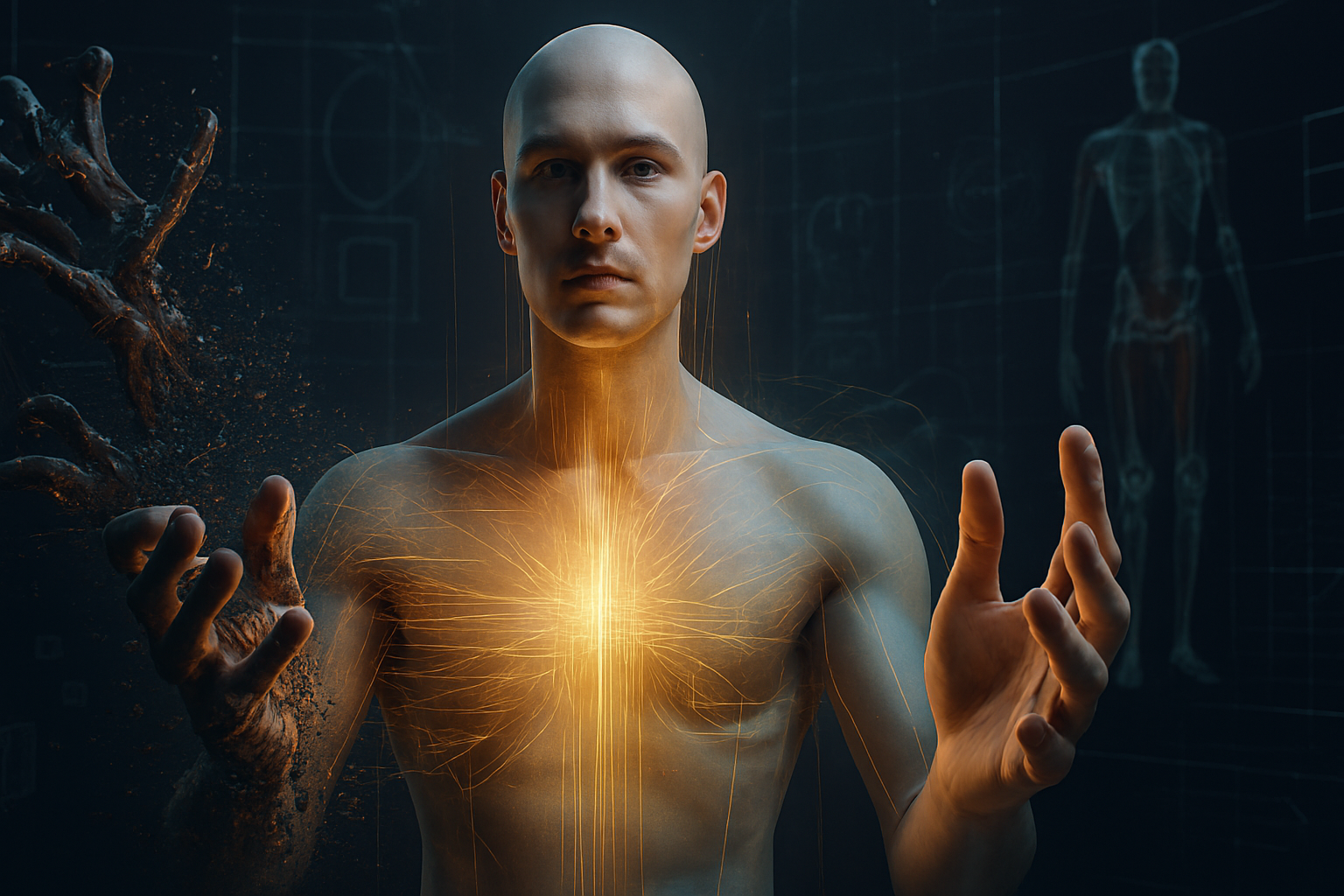
For years, one of the most reliable ways to spot an AI-generated image was to look at the hands. From six-fingered monstrosities to appendages that seemed to melt into the background, AI art generators have long struggled with the complex anatomy of the human hand, creating a running joke within the digital art community.
Recently, however, headlines have started to declare the problem over. One bold claim, likely referring to the new Gemini 3 Pro Image model, suggested, “This New 2026 AI Art Generator Just Solved the ‘Anatomy & Hands’ Problem Forever,” pointing to a new era of anatomical perfection in AI imagery. This has led many to believe that the days of uncanny, distorted hands are finally behind us.
But is the problem truly “solved,” or is the reality more complex? While the progress is undeniable, the story isn’t as simple as a single breakthrough. This article explores the surprising truths behind AI’s recent anatomical advancements and what’s really going on with the infamous “hand problem.”
The Problem Isn’t “Solved”—It’s “Substantially Mitigated”
The “Solved” Claim is More Hype Than Reality
Despite the definitive headlines, no single AI model has “solved” the hand problem entirely. While the latest generation of models has made incredible progress, achieving perfect anatomical accuracy 100% of the time is still an ongoing area of development. The bizarre, six-fingered hand can still occasionally make an appearance.
Instead of being solved, the issue has been “substantially mitigated” by the leading models. This means that while anatomically correct hands are now the norm in most cases, errors can still occur. The difference is that getting a good result is no longer a matter of luck; it’s the expected outcome.
In the end, the ‘problem’ has been substantially mitigated by leading models through continuous refinement, but a single, entirely solved solution that never produces an error likely does not exist.
There’s No Single Champion, But Specialized Contenders
Different AIs Excel at Different Anatomical Tasks
The improvement in rendering hands isn’t the result of one company cracking the code. Instead, different models have developed unique strengths, pushing the industry forward on multiple fronts. This specialization means the “best” tool now depends entirely on the user’s goal—mass-market reliability versus niche-specific precision.
• Midjourney V5/V6: For the average user, these versions were instrumental in turning the tide. By late 2025, they had made anatomically correct hands the standard outcome in most general use cases, achieving an accuracy rate of around 85-90%. For creating portraits or general scenes, Midjourney made the hand problem far less of a daily frustration.
• Google’s Gemini 3 Pro Image: For specialists, however, another contender emerged. While Midjourney improved general use, Google’s model has demonstrated exceptional performance in more specialized contexts. In studies focused on creating medical and anatomical illustrations, Gemini often outperforms competitors in generating highly accurate and complex structures, such as a detailed rendering of a hand skeleton.
The Most Reliable Method Still Requires a Human Touch
Professionals Rely on Human-AI Hybrid Workflows
Here’s the most surprising insight: for professional work in early 2026 where absolute perfection is required, the most reliable method isn’t just typing a better prompt. The best results come from combining AI generation with human oversight.
This process, known as a “hybrid workflow,” allows an artist to intervene with surgical precision. Instead of re-rolling the entire image and hoping for a better outcome, they use specialized tools like inpainting (to regenerate a specific part of an image, like a hand) or ControlNet (to guide the AI’s composition with a greater degree of precision).
This reveals that for high-stakes commercial or artistic projects, human skill is still crucial. The AI acts as an incredibly powerful assistant, but the artist’s eye and technical ability are what push the final image from “mostly correct” to flawless.
The Secret Sauce is Smarter Data, Not Just Bigger AI
Better Anatomy Comes From Better Training Data
The recent leap forward in anatomical accuracy isn’t just about building bigger and more powerful AI models. A key factor is the quality of the data used to train them. The secret is training these systems on new, highly specific, and better-annotated datasets.
A prime example is the HandPose-X dataset. Unlike standard image collections, this dataset includes detailed 3D joint coordinates for the hands in its images. This additional layer of information doesn’t just show the AI what a hand looks like; it helps teach the model the underlying structure and anatomical rules of how a hand is built and how it can bend. By understanding the “why” of anatomy, the AI gets much better at generating the “what.”
Conclusion: Beyond Perfect Hands
The narrative that AI has “solved the hand problem forever” is a classic case of technological oversimplification. The progress is very real, but it’s the result of a multi-faceted evolution, not a single magic bullet. Competing models pushing each other forward, the continued necessity of human-in-the-loop workflows, and critically, the development of smarter training data have all contributed to where we are today.
We have moved from a time when good hands were a rare accident to an era where they are the expected result. The six-fingered nightmare is mostly over, but the quest for perfection continues.
Now that AI is mastering the fine details of human anatomy, what’s the next great creative challenge it will tackle?