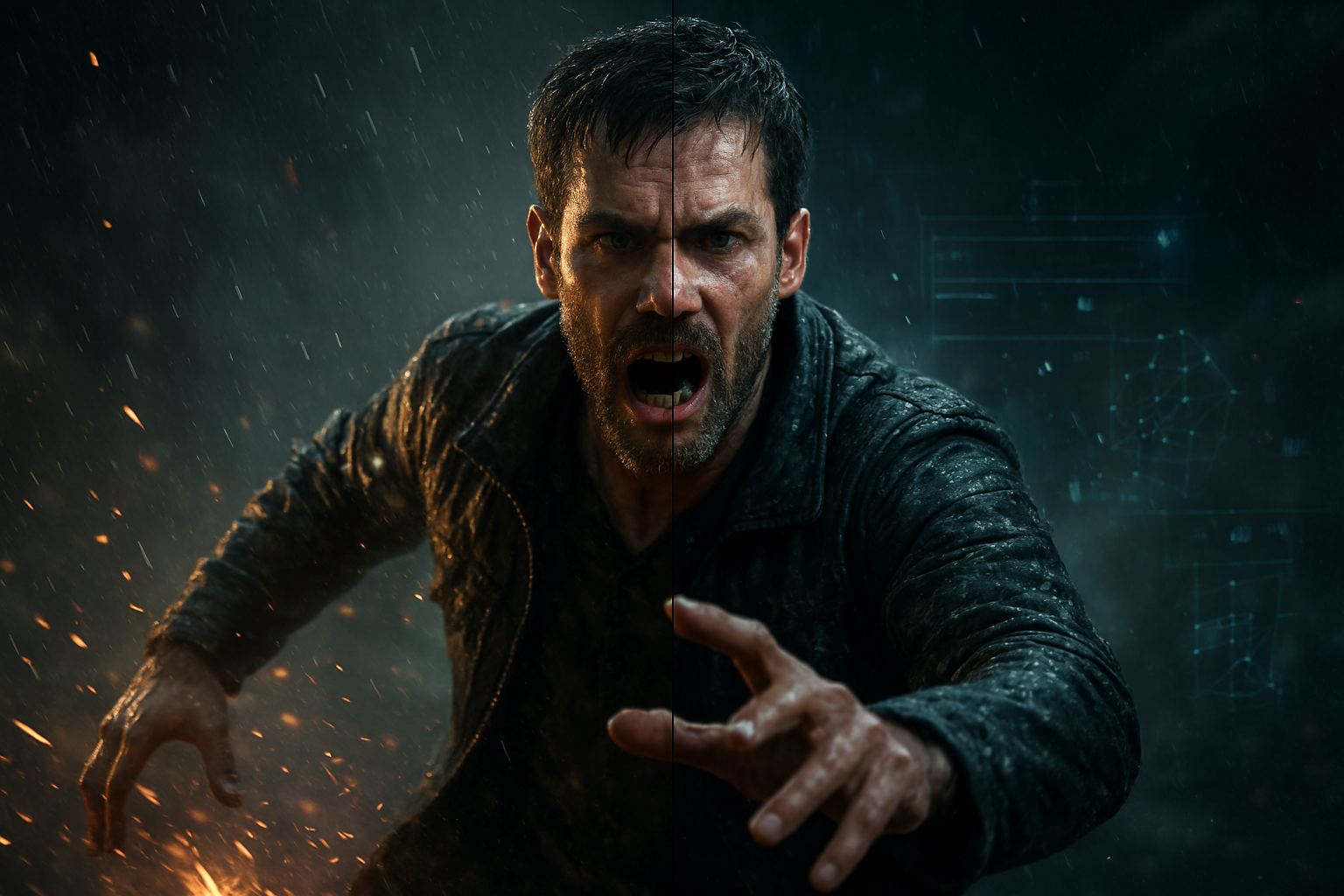
In the cinematic landscape of 2026, the line between reality and AI generation has all but vanished. In our analysis, “Cinematic Frontiers,” we explored how the competition between the top models, OpenAI’s Sora 2 and Kuaishou’s Kling (v2.6), is redefining the industry. The real story isn’t one of simple dominance, but of a strategic divergence that empowers creators like never before.
The Era of Hyper-Realism is the New Baseline
The primary achievement of both Sora 2 and Kling is their stunning ability to generate hyper-realistic movie scenes. This incredible level of quality is no longer a groundbreaking feature but the expected standard, completely redefining the baseline for AI-generated film.
I Generated a 60-Second Movie Scene and I Can’t Believe It’s Not Real
Achieving this baseline of cinematic realism means that the technical barrier to creating cinema-quality visuals is rapidly disappearing, shifting the focus from technical feasibility to pure creative vision.
It’s Not a Battle for Supremacy, It’s a Choice of Specialization
The most critical takeaway from the current state of AI film is that while both models are immensely powerful, their true value lies in their distinct capabilities. Sora 2 and Kling excel in different areas of production, revealing a clear trend toward specialization. This transforms the conversation for creators. The question is no longer “which AI is best?” but has evolved into a strategic choice: “which AI is the right tool for this specific creative task?”
The Future is a Creative Collaboration
The future of AI filmmaking in 2026 is not about a single model winning a technological arms race. Instead, it’s about creators having access to a suite of specialized tools, each with unique strengths, ready to bring any vision to life.
When the creator’s toolkit is no longer just cameras and software, but a suite of collaborative AI specialists, how do we redefine the very art of directing?