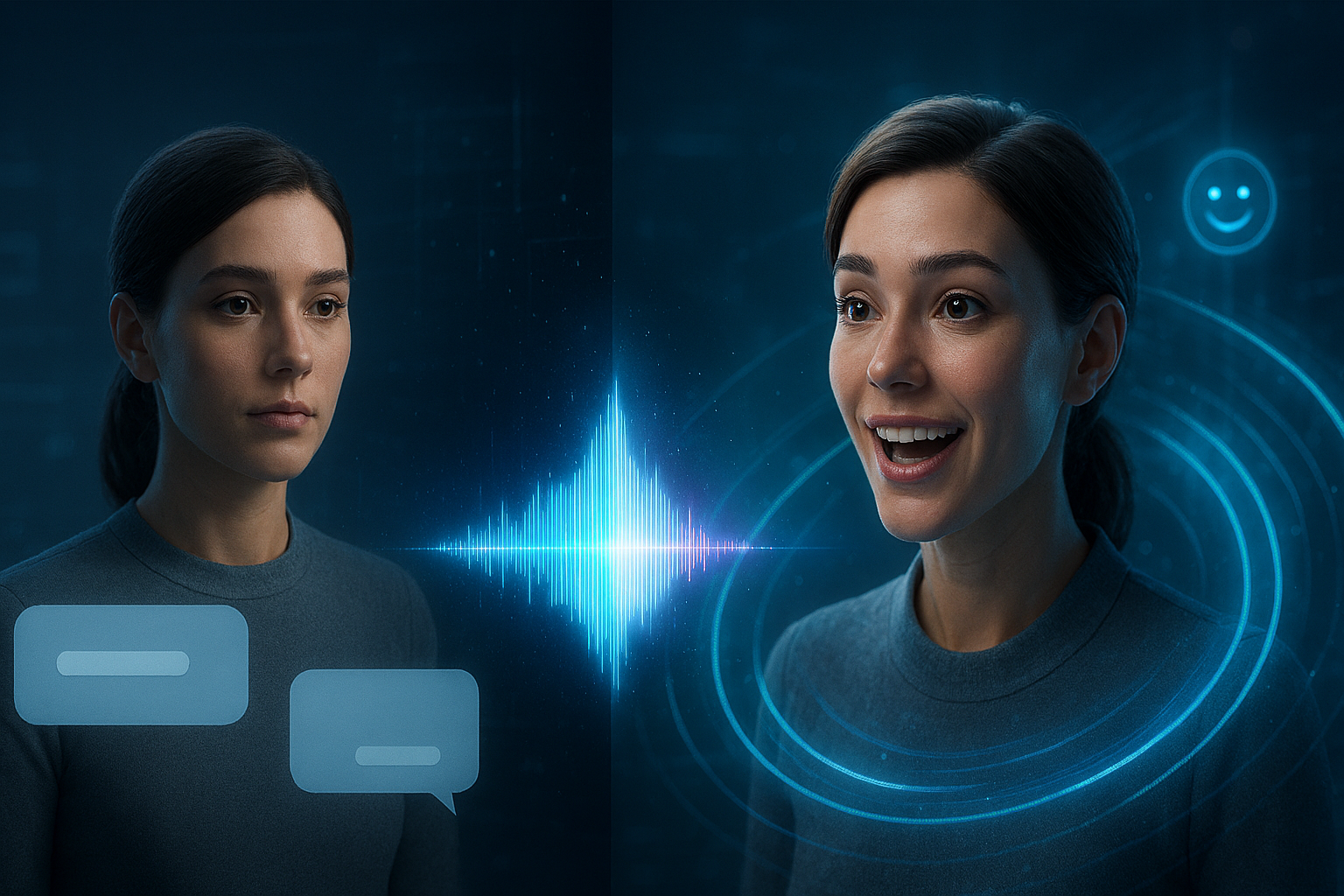
The static text box is dead. The next generation of AI companionship is here, and it’s demanding a multi-sensory experience that legacy platforms are struggling to provide. This evolution is sparking significant shifts in user loyalty, leading to one of the most notable trends in the space: a growing migration of users from the well-known Character AI to a newer platform, Talkie AI.
This isn’t just a case of a new app gaining temporary buzz; it represents a fundamental change in what people want from a virtual companion. The move is driven by a desire for experiences that feel more alive, engaging, and personal. So, what’s driving this change and causing users to make the switch?
It’s More Than Just Talk: The Rise of the “Voice-Visual” Experience
Users are increasingly drawn to Talkie AI’s rich, multimodal experience that seamlessly integrates voice, video, and images. This stands in sharp contrast to Character AI’s primarily text-based interactions. While Character AI does have a voice feature, Talkie elevates the concept with its “Voice-Visual” sync, creating a far more seamless and integrated experience.
This technology includes features like impressive lip-sync accuracy in AI-generated videos and dynamic visual responses that match voice inputs. When a character’s appearance, expressions, and voice are all synchronized, it moves the conversation from a simple chat to a more engaging and immersive experience. This leap in sensory immersion helps bridge the uncanny valley, shifting the user’s perception from interacting with a program to conversing with a presence.
From Storytelling Tool to Entertainment Platform
The two platforms cater to fundamentally different user goals. Character AI has carved out a niche focused on deep, text-based roleplay, creative storytelling, and educational scenarios—a strength bolstered by its support for complex, multi-character group chats, a feature where it still holds an edge. Talkie AI, on the other hand, positions itself squarely as an entertainment platform centered on virtual companionship.
This entertainment focus is supported by a thriving user-generated content (UGC) community and the gamification of creation through rewards. This fosters a different kind of ecosystem—one that feels less like a writer’s workshop and more like an interactive game. By gamifying content creation with rewards, Talkie builds a powerful flywheel for user engagement and retention, a model borrowed from successful mobile gaming platforms.
The Creator Economy Comes for AI Companions
Talkie AI isn’t just adding a feature; it’s plugging into the massive, multi-billion dollar creator economy, a move that established platforms have been slow to make in the AI companion space. The platform explicitly allows creators to set prices for their custom character cards and profit from their creations within the community.
This feature is a significant draw for content creators who invest time and creativity into building unique and compelling AI personalities. By providing a direct path to monetization, Talkie AI not only empowers its community but also incentivizes the creation of higher-quality, more engaging characters. For creators, this transforms a hobby into a potential source of income, a capability not offered by Character AI.
Your Conversations Are Actually Your Own
In an age of increasing concern over digital privacy, control over personal data is a critical feature. Here, the two platforms have divergent policies. Character AI tracks user messages to help train its models, a common practice but one that gives some users pause.
In contrast, Talkie AI prioritizes user privacy by offering end-to-end encryption for conversations. It also provides the option to delete conversations completely, giving users full control over their interaction history. In an era where personal data is the currency of AI training, Talkie’s stance on privacy isn’t just a feature—it’s a core value proposition that builds crucial user trust.
Conclusion: A Glimpse into the Future
This migration isn’t just a change in preference; it’s a clear market signal. The demand has shifted from passive storytelling tools to active, participatory entertainment ecosystems. Users are voting with their time, moving toward platforms that offer a more immersive and private experience that goes far beyond the text window.
This evolution leaves us with a fascinating question to ponder. As AI becomes ever more lifelike, what will we value more—deeper storytelling or a fully immersive experience?